




Becoming a caregiver wasn’t a choice for Maria Ghafoor—it was a necessity. When her son suffered a stroke at birth in 2015, she stepped away from the workforce to care for him full time, putting her career aspirations on hold for years.
Alina Yllanes faced a different kind of uncertainty. As a single mother of two, she was forced to leave her home and rebuild her life, searching for a path that could provide long-term stability for her family.
And for Zenda Daniels, starting over meant leaving behind a difficult past and entering a domestic violence shelter with her newborn daughter—an experience that reshaped her future and pushed her to find new opportunities.
Though their journeys are different, they each were caregivers at a crossroads, searching for a way forward. At Marymount University, they found it.
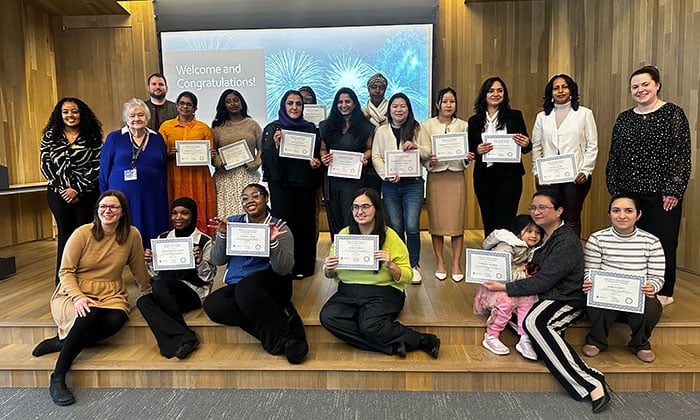
Established by the institution’s Center for the Innovative Workforce, the From Caregiver to Breadwinner Program has helped individuals transition from unpaid caregiving roles into sustainable careers in the technology industry. Funded primarily through a $766,000 U.S. Department of Labor Community Project Funding Grant, with additional support from ISACA, the initiative has served 146 participants since its launch in February 2024. The program has offered no-cost, 12-week training in IT and AI fundamentals, prepared participants for the CompTIA Tech+ certification and provided ongoing mentorship and job search support.
For Marymount’s Dr. Diane Murphy, Director of the Center for the Innovative Workforce and the program’s creator, the concept was rooted in recognizing untapped potential.
“In our view, caregivers already possess many of the essential skills needed in IT roles—customer service, empathy, patience and the ability to listen and think critically,” Dr. Murphy explained. “Many participants were already familiar with technology, especially after supporting their children with online learning during the pandemic. They had a baseline level of technical awareness, and our goal was to build on that foundation and provide a deeper understanding.”
“Our participants received instruction on the essentials of IT, from hardware and operating systems to software and networking, while actively applying concepts they learned in labs to troubleshoot situations,” added Jennifer Weiser, Project Manager for the From Caregiver to Breadwinner Program. “To ensure they are job-ready for today’s workforce needs, we also included content on artificial intelligence and the cloud.”
For Yllanes, the opportunity to join the program was “completely game-changing.” Before enrolling, she had tried breaking into the tech field on her own by taking a CompTIA course independently while working in childcare. But without a structured environment or support system, the material quickly became overwhelming.
“As a single parent with two daughters, caregiving wasn’t something that would be sustainable long term,” she said. “I had always been interested in the tech field, particularly cybersecurity. When this cohort at Marymount came up, I was really grateful. So many parts of my life have felt like miracles, moments when the right opportunity appeared at the right time. This program feels like one of those moments.”
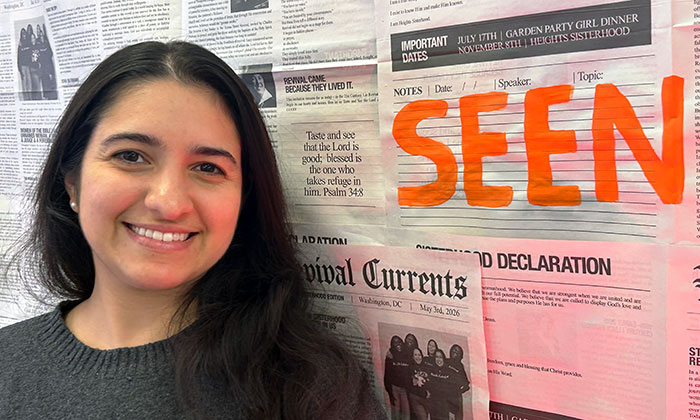
Earning her Tech+ certification was a turning point for Yllanes, whose confidence skyrocketed. Through the program, she worked through hands-on labs, practice exams and guided instruction that broke down complex concepts into manageable components. With the support of instructors and peers, and the flexibility to balance coursework with raising her children, she stayed on track and gained the necessary skills to succeed.
“It was a huge relief, and it made me realize that I actually can do this,” Yllanes reflected. “When I was trying to do this on my own before, it quickly became overwhelming. There’s a personal battle that happens—you start to question whether you can really do it. But when you have people around you saying, ‘You can do this, and we’re going to break it down so you can understand it,’ it changes everything.”
That sense of support has been a defining feature of the program, both inside and outside the classroom. Instruction is designed to make technical concepts accessible while preparing participants for real-world roles in IT support and beyond.
“One thing I emphasize is translating technical language into everyday language,” said Damien Budnick, a Marymount alumnus and program instructor. “In IT support, you’re constantly communicating with people who aren’t technical experts. You need to explain problems clearly—how something happened, how you fixed it and how to prevent it in the future. I try to teach students how to think that way.”
With a professional background as an IT support engineer, Budnick has worked in a variety of organizations—government, private sector, large companies and small teams. Seeking to give back to his alma mater by teaching courses in the program, he was struck by the students’ determination.
“Many of these students are parents with multiple children, and they’re trying to make a significant career change later in life. That takes a lot of courage,” he said. “Seeing their dedication—coming to class on time, completing assignments and asking thoughtful questions—has been incredibly inspiring. And they’re not just learning the material, they’re challenging it. They ask why certain systems work the way they do and explore how things could be improved. That kind of curiosity is exactly what the IT field needs.”
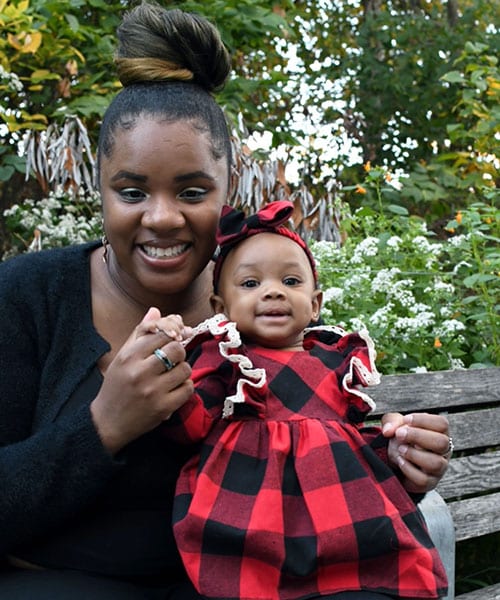
The program didn’t just offer technical training for students like Daniels—it also provided a sense of belonging during a time of transition. After relocating to Virginia from New York following a difficult period in her life, she was starting over with her young daughter and seeking to find stability. Although she had long been interested in technology, her experience at Marymount allowed her to translate that curiosity into a viable career path.
“This program has given me a sense of hope and possibility that I didn’t have when I first moved here,” Daniels said. “Starting over in a new state—without a car, without a network—can be overwhelming. But this experience has helped me believe that the sky really is the limit.”
Equally important, she says, are the relationships built along the way. Daniels took an active role in fostering connection, as she organized a study group with fellow participants to prepare for certification exams.
“The relationships with the other women in the program have been very meaningful,” she shared. “We support each other not just professionally, but personally as well. Some of us connect to talk about our faith and encourage each other through different life challenges. We’ve created a real community that goes beyond the classroom.”
That sense of belonging has also been transformative for Ghafoor, who was part of the program’s first cohort and is now continuing her education at Marymount. After years out of the workforce, she had struggled to break into the IT field despite earning an associate’s degree—often finding herself overlooked for roles due to a lack of hands-on experience. But Marymount’s program strengthened her technical foundation and sparked new confidence to pursue opportunities, applying for jobs while completing her certification and actively building industry relationships.
“As a caregiver, you often put your own needs aside,” she said. “For many years, I was focused entirely on my family and didn’t have much of a social or professional network. Through this program, I was able to build connections again. It gave me a sense of community that I hadn’t had in a long time.”
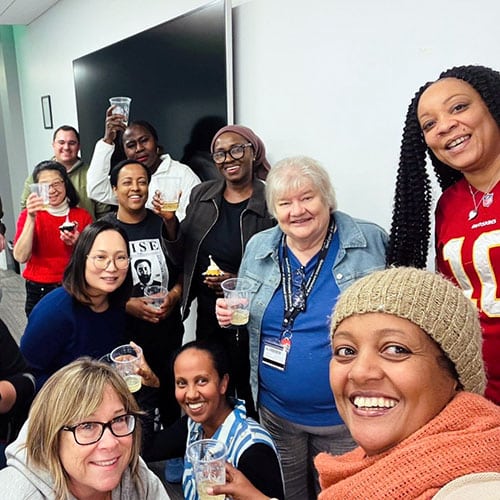
With encouragement from Dr. Murphy, Ghafoor took the next step—enrolling at the University to pursue a bachelor’s degree in Cybersecurity, with a minor in digital forensics. She expects to graduate in May 2028.
“When I shared that I wanted to continue my education but didn’t have the means, Dr. Murphy helped connect me with a scholarship opportunity at Marymount,” Ghafoor said. “That experience meant a lot to me. It showed that people saw potential in me and were willing to invest in my future.”
Across cohorts, the program’s combination of support, structure and opportunity has led to measurable results. According to Dr. Murphy, attendance rates exceeded 95 percent, even as participants balanced coursework with jobs, caregiving responsibilities and family life.
“One of the things that stood out most to me was how motivated the students were,” she recalled. “That level of commitment was incredibly impressive and speaks to their readiness to succeed in the workforce.”
While the current cohort marks the final round of the From Caregiver to Breadwinner Program, its impact will continue to be felt beyond the classroom. Participants will receive ongoing mentorship through September 2026, ensuring they remain connected to career-focused resources as they transition into the workforce. And for Marymount, it has created a lasting model for how higher education can better support nontraditional students to help them move forward with purpose.
Organizations interested in learning more about the program and its participants can contact Jennifer Weiser at .
