




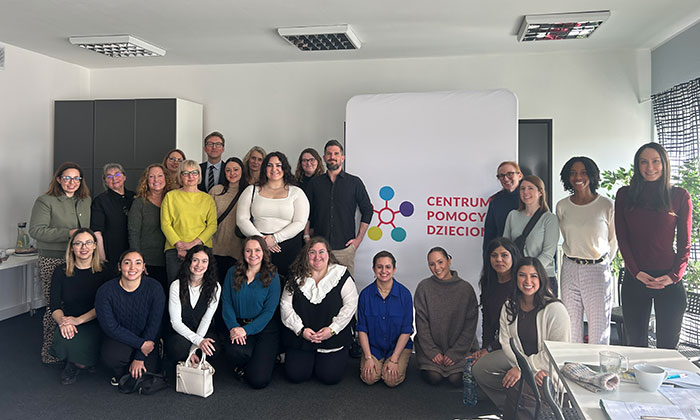
Students in Marymount University’s School of Counseling built multicultural competencies last semester during an experiential learning trip to Poland.
The group, composed of 15 students from the Clinical Mental Health Counseling and Pastoral Clinical Mental Health Counseling master’s programs and three students from the Counselor Education and Supervision doctoral program, spent the week in Poznań, Poland, learning about the unique cultural and historical factors that have shaped the Polish approach to mental health treatment.
The excursion is the latest in a series conducted by the School of Counseling to emphasize multiculturalism in counseling practice.
“For the past 13 years, we’ve taken students to European countries including Germany, Ireland, Switzerland, Hungary and Greece to study comparative mental health systems and explore interdisciplinary responses to each country’s unique mental health issues,” said Dr. Lisa Jackson-Cherry, Director of the School of Counseling and faculty trip leader. “The goal is to expose students to global approaches to mental health care and treatment, allowing them to see how different countries respond to mental health needs through a multicultural lens.”
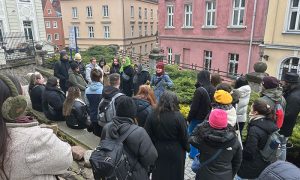
During the trip, students and faculty members conducted site visits to local schools and nonprofits to witness the Polish approach firsthand. This included visiting Caritas Poznań, a Catholic organization that provides mental health services, language classes and vocational training to Ukrainian refugees. They also stopped by the Centrum Pomocy Dzieciom, or “Children’s Help Center.” This organization focuses on family services, especially for displaced families from Ukraine.
“Hearing from those refugees and the clinicians helping them gave me a better understanding of how historical and political stressors shape a society’s emotional and psychological health,” said Ph.D. student Greta Christ. “It was a powerful reminder that the situation in Ukraine is not something distant or in the past. It is affecting the everyday life of people across Eastern Europe. Hearing firsthand accounts made it clear how critical it is to stay engaged and advocate for those still living through crisis, even when the world’s attention moves on.”
The group also visited the Poznań Psychoanalytic Institute, where students learned about long-term psychoanalysis practices and the differences between American and European approaches to mental health treatment.
“European countries emphasize interdisciplinary collaboration, integrating mental health, vocational training, education and health care into their treatment plans,” Dr. Jackson-Cherry explained. “Historical, political and religious factors also shape mental health responses in each country. At the Institute, our students got to see how a country’s history—like Poland’s experience with war—affects its current mental health landscape.”

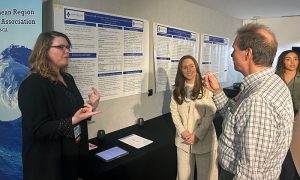
Students also attended a Mediterranean Region Counselors Association conference. Master’s students created poster presentations on counseling-related topics, while doctoral students gave one-hour oral presentations on interdisciplinary approaches to counseling.
Ph.D. student Ailish Dermody presented on the benefits of equine-facilitated psychotherapy for refugee populations.
“At my clinic, we meet with Afghan refugee families who have just arrived in the States and do interactive group work with horses,” she said. “That has been incredibly effective because they understand the stories of the horses, many of whom endured traumatic or abusive situations before we rescued them. It’s powerful to see these little kids, who don’t speak English, relating to the horses, saying, ‘That horse has a story just like mine. They don’t have a home either and they had to move, and it was unfamiliar and scary. But they’re okay, so I’m going to be okay.’ It’s very moving and is also a step toward them understanding there’s healing in their future.”
Meanwhile, Christ presented findings from her research working with older populations and those with dementia.
“There’s a misconception, especially in the U.S., that therapy isn’t effective for people with dementia,” she explained. “I wanted to challenge that. Insurance often doesn’t cover treatment, assuming these individuals can’t benefit, but research shows otherwise. We can and should adapt our approach to meet their needs.”
Dermody says the trip deepened her understanding of the importance of cultural competence in counseling practice.
“It hit home for me that multiculturalism is essential in counseling. In practice, we will encounter people who have such different lived experiences from our own, who haven’t had the benefits and freedoms we have in our country. There are so many things we take for granted, and we must increase our awareness and adjust our scope of practice so that it’s not just inclusive, but embraces working with those populations and seeking them out.”
Next year’s trip is tentatively planned for Seville, Spain. Dr. Jackson-Cherry hopes students will continue to benefit from exposure to different counseling perspectives.
“Students consistently say the experience gives them a broader understanding of mental health and its global influences. Many are inspired by the interdisciplinary models they see and consider how those can be applied in their work. These trips often lead to long-term connections with international organizations and open up post-graduate opportunities for students.”
“I love the opportunities Marymount offers—whether it’s travel, research or leadership,” Christ added. “As a student, I get to keep learning and growing. I appreciate the flexibility and encouragement to pursue unexpected opportunities like this one. This was such a formative experience, and I can’t wait for the next one!”
