
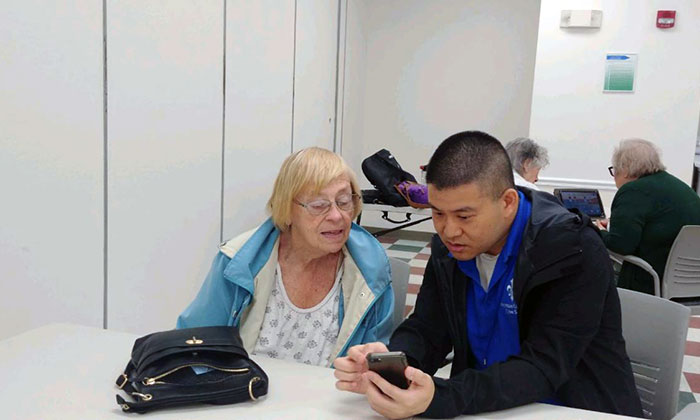
With demand for tech literacy soaring among older adults, Marymount University has expanded its decade-long partnership with the Falls Church Senior Center, launching new hands-on Cyber Clinics and increasing its course offerings in humanities and technology.
The initiative, which connects faculty and students with local seniors, has seen record participation this year as more seniors seek to stay connected in an increasingly digital world. The partnership began in 2014 when senior center members Debbie Massey and Ellen Salsbury approached Marymount about providing educational programming.
“The first Marymount course was a presentation from five professors, each dealing with a different subject germane to seniors such as communicating with adult children, downsizing, getting the most out of doctor’s visits, staying fit and using technology for mental and physical fitness,” Salsbury explained.
Dr. Diane Murphy, Director of Marymount’s School of Technology and Innovation, was one of those first faculty members to get involved in the project.
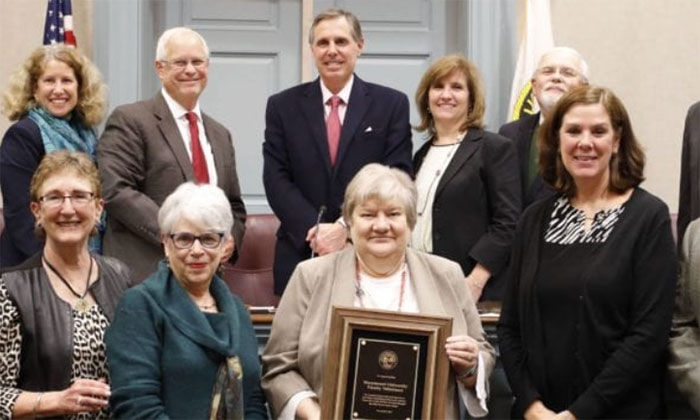
“I started by providing technology classes to the seniors—courses on how to work Google Maps and the basics of using a smartphone,” Dr. Murphy said. “Back then, it was more about basic support as many seniors weren’t very tech-savvy.”
Since 2014, Dr. Murphy has taught over 30 seminars—two-hour classes once a week over three-week periods—and has seen the partnership and demand for continuing education grow.
“Before the COVID pandemic, we were trying to sell these classes to people, encouraging them to come and learn about technology. But since the pandemic, there has been a radical shift. Now, so many things are done online and these technology skills are really necessary. We’ve seen a lot more seniors sign up for classes because having these technology skills gives them more freedom to be independent and empowered in their everyday lives.”
As demand for tech literacy has grown, Dr. Murphy has worked with the Senior Center to host more classes revolving around tech topics such as scams, AI integration and cybersecurity. She has also made these seminars into a learning opportunity for her Marymount students to get real-world experience outside of the classroom.
“This year, we started hosting ‘Cyber Clinics’ where we had the seniors bring any devices they were having trouble with, and my students would troubleshoot and fix them,” Dr. Murphy said. “It is a great opportunity for the students to work with real people to fix real problems, even if it is just on a small scale.”
As the partnership has evolved, demand for greater course variety has increased. In addition to technology basics, the program now has courses in art, history and literature.
“I got involved with the program in 2020 when I saw an email calling for volunteers to teach some more humanities-based courses,” said Dr. Eric Norton, Director of Marymount’s School of Humanities and Associate Professor of Literature. “Since then, I have taught many seminars on topics such as Black American novels, temperance literature and aging in literature.”
Senior center director Tracy Browand says the new humanities courses have been well received by the seniors.
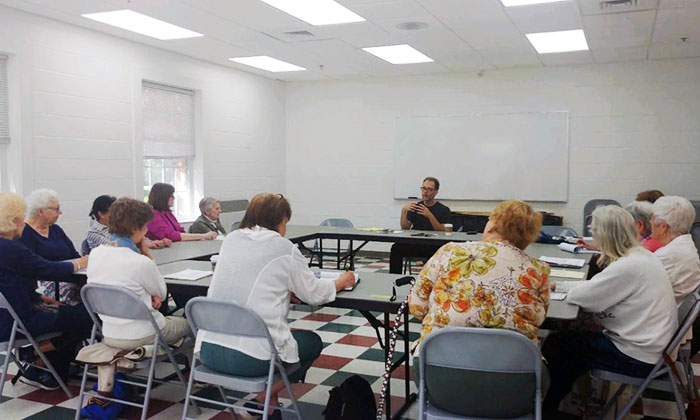
“The classes fill up quickly and usually have a waiting list. The seniors really love these education programs because they help stimulate their minds and keep their brains active,” Browand explained. “It is so nice to see so many faculty members interact with our seniors. We appreciate the generosity of Marymount faculty volunteering their time and expertise to keep this great partnership going.”
Dr. Norton says that even though he’s the one teaching the course materials, he is also learning a considerable amount from his new students.
“As a teacher, I am always learning from my students. But teaching to a different population than usual has been really enriching,” Dr. Norton reflected. “The people I teach at the Senior Center have had whole lives and careers, which brings so many different perspectives to the texts we are reading. And because they are in a different phase of life, they can teach me about topics such as aging, because they have a unique perspective that my college students don’t have.”
As the program continues to expand, Dr. Murphy encourages more Marymount students and faculty members to get involved.
“As an interdisciplinary institution, we are uniquely positioned to offer educational programs that can help people of all ages and backgrounds continue to engage in lifelong learning. We should embrace that opportunity in all aspects of the Marymount experience.”
