




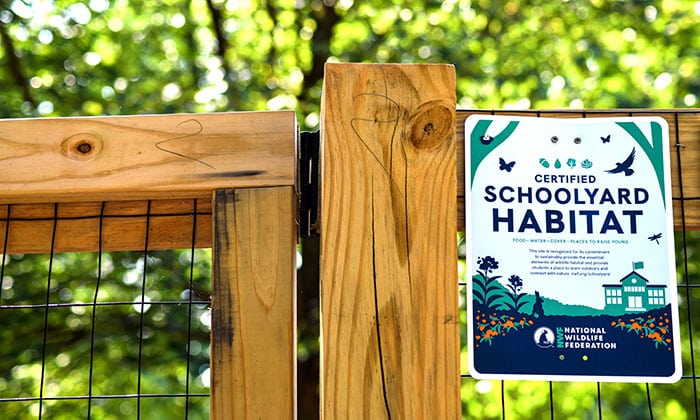
The National Wildlife Federation (NWF) has recognized Marymount University’s Early Learning Academy (ELA) for successfully creating a Certified Schoolyard Habitat, demonstrating the University’s commitment to environmental stewardship and hands-on learning.
With this designation through the NWF’s Garden for Wildlife program, Marymount joins over 11,000 schools nationwide that have transformed their grounds into thriving wildlife habitats that provide essential elements all wildlife need — natural food sources, clean water, cover and places to raise their young. The habitat also serves as an outdoor classroom, offering students opportunities to engage in cross-curricular, experiential learning.
“We are thrilled to earn this National Wildlife Federation certification, a reflection of our commitment to nurturing children’s curiosity, respect and love for the natural world every single day,” said Kristen Cunningham, Director of Marymount University’s Early Learning Academy.
“We are excited to have another school join our growing list of more than 11,000 certified Schoolyard Habitats,” added Liz Soper, senior director of K-12 programs for the National Wildlife Federation. “Students can now personally experience nature, protect wildlife and learn through hands-on experiences in an outdoor environment.”
At the heart of the ELA’s newly certified habitat is a thoughtfully designed outdoor learning environment that blends exploration with ecological function. A grassy hill serves as the focal point, featuring a 27-foot embankment slide alongside steps, stumps, ramps, boulders and lookout points that encourage movement and discovery.
A re-engineered rain garden anchors the space, planted with nearly 300 native trees, shrubs, grasses and perennials. Designed to absorb stormwater from the surrounding area — including adjacent buildings and parking surfaces — the garden provides year-round color and texture while attracting birds, insects and pollinators. Students can observe seasonal changes, wildlife activity and the natural movement of water, turning everyday play into meaningful environmental learning.
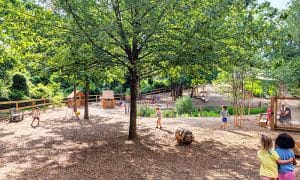
Surrounding the rain garden are a variety of activity zones that support active and quiet engagement, including an outdoor art studio, balance trail, hammocks and gliders, loose-parts building area and sensory play spaces with sand, water and natural materials. These features create a dynamic setting that fosters creativity and connection to nature.
“Research consistently shows that when young children spend time outdoors, they experience stronger physical health, social-emotional development and cognitive growth, while also building a lasting connection to the natural world,” explained Faye Leier, Assistant Director of Marymount University’s Early Learning Academy. “Outdoor learning is central to our play-based curriculum. Our students go outside every day, in all types of weather — it’s not uncommon to see them in rain suits and boots, fully immersed in the joy of learning through nature.”
Launched in Fall 2023, the ELA provides a high-quality, research-based preschool experience that integrates play-based learning with individualized attention to foster imagination, social development and school readiness. Located within a diverse university setting, it also serves as a training ground for future educators in Marymount’s School of Education.
The certified habitat further enhances the ELA’s innovative approach, complementing its new STEAM Lab and outdoor STEAM learning area. Supported by a $75,000 Child Care Capacity Building & Quality Improvement Grant from the Arlington County Board and additional donor funding, the initiative expands opportunities for nature-based creativity and hands-on discovery.
NWF is America’s largest conservation organization, dedicated to inspiring Americans to protect wildlife for future generations. Its Garden for Wildlife program encourages responsible gardening practices that help pollinators and other wildlife thrive, including planting native species and reducing chemical pesticide use. With more than 313,000 certified wildlife habitats nationwide, the program recognizes individuals, schools and communities committed to creating sustainable environments where wildlife can flourish.
