




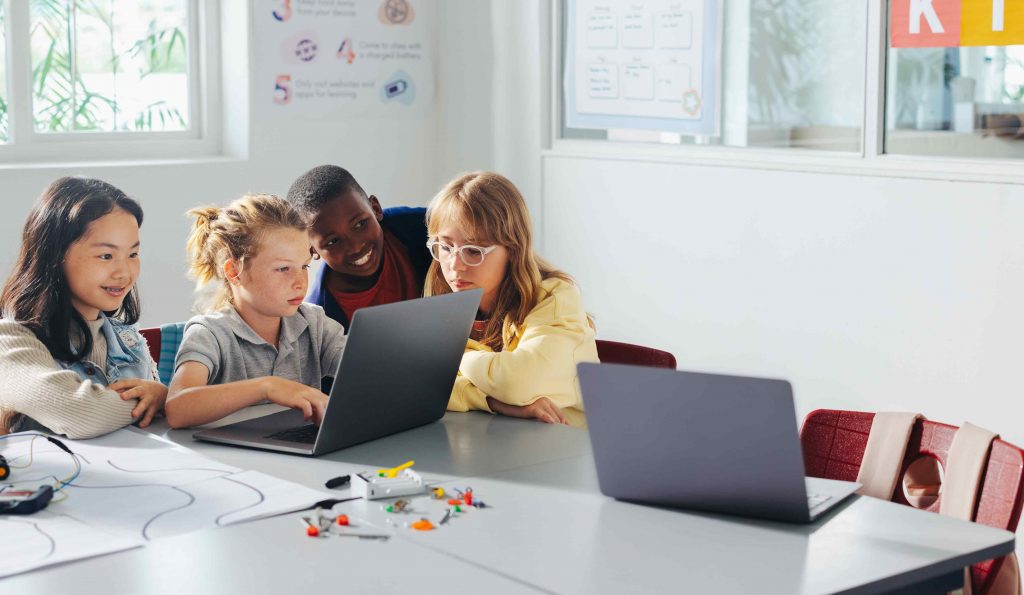
Project-based learning (PBL) is transforming the way students engage with education. It moves beyond rote memorization and test preparation to emphasize hands-on exploration, collaborative learning strategies, and critical thinking. In K–12 classrooms, this approach allows learners to tackle real-world challenges and develop meaningful connections between subjects where they can, in turn, take greater ownership of their learning.
As schools continue to seek ways to prepare students for an increasingly complex world, learn how incorporating project-based learning stands out as a powerful strategy for fostering curiosity, creativity, long-term success, and active learning in classrooms.
Understanding Project-Based Learning
To see why project-based learning has become such a valuable instructional model, it’s important to first define what it is, how it differs from traditional approaches, and the core principles that guide its use in cultivating active learning in classrooms.
Defining PBL and How It Differs From Traditional Instruction
Project-based learning is an instructional approach where students actively explore complex questions, problems, or challenges over an extended period of time, resulting in a tangible product or presentation. Unlike traditional instruction — which often centers on lectures, worksheets, and standardized testing — PBL emphasizes student-driven inquiry, active learning strategies for students, and application of knowledge in real-world contexts. This shift transforms students from passive recipients of information into active participants in their own learning journey.
Core Principles of Project-Based Learning
Several key principles shape effective PBL experiences:
- Projects are framed around meaningful questions or problems that require sustained investigation, not quick answers.
- Learning is student-centered, giving young people the opportunity to explore ideas, test solutions, and iterate on their work.
- Authenticity is also central; projects are often connected to real-world issues or audiences, which helps students see the relevance of what they are learning.
- Assessing project-based learning is ongoing and performance-based, enabling students to reflect and improve throughout the process rather than relying solely on end-of-unit tests.
The Role of Inquiry, Collaboration, and Reflection
- Inquiry drives the PBL process, with students posing questions, conducting research, and developing creative solutions.
- Collaborative learning strategies are equally vital, as projects typically require teamwork, communication, and the ability to navigate diverse perspectives — skills that mirror real-life professional environments.
- Reflection rounds out the model by encouraging students to think critically about what they have learned, how they worked together, and how they might approach future challenges differently.
Altogether, these elements nurture a deeper and more enduring understanding of both content and process.
Benefits of Project-Based Learning in K-12 Education
When thoughtfully implemented, project-based learning offers a wide range of benefits that support both academic achievement and personal growth. From sharpening essential skills to increasing motivation, PBL equips students with tools that extend far beyond the classroom.
Enhancing Critical Thinking and Problem-Solving Skills
Through PBL, students are regularly challenged to analyze information, evaluate possible solutions, and make decisions based on evidence. Rather than memorizing facts in isolation, they apply their knowledge to solve complex, real-world problems. This process nurtures critical thinking by encouraging students to ask deeper questions, consider multiple perspectives, and learn from trial and error. As a result, they develop stronger reasoning skills and become more adaptable thinkers prepared to navigate uncertainty.
Fostering Motivation Through Student Engagement Techniques
One of the most powerful aspects of PBL is its ability to ignite curiosity and sustain student interest. Because projects often connect to real-life issues, personal interests, or community needs, learners see their work as meaningful and relevant. This sense of purpose increases motivation and reduces disengagement often associated with traditional instruction. The opportunity to have choice in project direction further empowers students and, therefore, gives them ownership over their learning and greater intrinsic motivation to succeed.
Building Collaboration and Communication Abilities
Collaboration lies at the heart of most project-based experiential learning methods. Essential skills for both academic and workplace success that students learn include how to:
- Share ideas.
- Listen to peers.
- Delegate tasks.
- Resolve conflicts.
PBL also strengthens communication by requiring students to present findings, explain their reasoning, and tailor messages for different audiences. Whether creating a multimedia presentation or delivering a group pitch, students gain confidence in expressing themselves clearly and persuasively.
Designing Effective Project-Based Learning Experiences
For project-based learning to deliver its full impact, projects must be carefully designed to balance academic rigor with student engagement. The most effective PBL experiences are those that align with curriculum design/goals, honor student interests, and connect learning to meaningful real-world contexts.
Aligning Projects With Curriculum Standards and Learning Objectives
Successful PBL doesn’t mean abandoning standards but rather approaching them in dynamic and engaging ways. Teachers should begin by identifying the key skills, knowledge, and outcomes outlined in the curriculum and then design projects that integrate these objectives. Ensuring that projects are academically grounded, educators can confidently demonstrate that students are not just engaged but also mastering the required content.
Incorporating Student Voice and Choice
A hallmark of PBL is giving students the ability to shape their learning experience. Whether choosing a project topic, deciding how to investigate a question, or selecting the format of their final presentation, student voice (and choice) promotes a sense of ownership. When learners feel empowered to make decisions, they are more invested in the process, willing to take creative risks, and likely to persist through challenges.
Ensuring Projects Are Relevant and Connected to Real-World Issues
Relevance is what transforms a school assignment into an engaging, memorable project. When students see clear connections between their work and authentic problems — whether in their community, environment, or broader world — they recognize the value of their learning. Tying projects to real-world issues both deepens understanding as well as fosters civic awareness, empathy, and a sense of responsibility. Working on challenges that matter, students develop the confidence and skills to become problem-solvers outside the classroom.
Implementing PBL in Elementary Classrooms
Introducing project-based learning in elementary grades requires thoughtful planning to ensure projects are accessible, engaging, and developmentally appropriate. With the right strategies, teachers can help younger students build foundational skills while sparking curiosity and joy in learning.
Age-Appropriate Project Ideas for Younger Learners
Elementary students thrive when hands-on learning activities are concrete and connected to their everyday lives. These types of projects balance play with purpose, allowing children to practice problem-solving and collaboration while keeping activities fun and manageable. Project-based learning examples may include:
- Creating a class garden to learn about ecosystems.
- Designing posters to promote recycling.
- Building simple models to explore community roles.
Integrating PBL Across Multiple Subjects
One of the strengths of PBL in elementary classrooms is its natural fit for cross-curricular learning. By blending subjects, teachers make learning more holistic and show students how different skills connect in meaningful ways.
A single project can weave together math, science, reading, and art — for instance, planning a class bake sale might entail:
- Measuring ingredients (math)
- Writing persuasive flyers (language arts)
- Studying healthy food choices (science)
Managing Classroom Time and Resources Effectively
Because younger learners require more structure, teachers must thoughtfully manage the pacing and scope of projects. Breaking projects into smaller steps, providing visual schedules, and setting clear milestones can help students stay on track. Additionally, using classroom centers, peer helpers, and simple materials ensures projects remain feasible and inclusive. With skillful organization, even resource-limited classrooms can successfully adopt PBL and create memorable learning experiences for their students.
Implementing PBL in Secondary Classrooms
At the middle and high school levels, project-based learning can take on greater complexity, depth, and independence. Older students are ready to tackle interdisciplinary projects and use advanced tools while assuming ownership of their roles, meaning that PBL is a powerful way to prepare them for college, careers, and civic life.
Designing Interdisciplinary Projects for Older Students
Secondary classrooms provide an ideal setting for projects that bridge multiple subject areas. Interdisciplinary projects mirror real-world problem-solving, helping students see how knowledge from different fields comes together to address complex challenges.
For instance, a sustainability project might combine:
- Science (renewable energy research)
- Math (data analysis)
- Social studies (policy implications)
- English (persuasive writing or public speaking)
Leveraging Technology for Research and Presentation
Technology plays a central role in secondary-level PBL, offering students access to digital research tools, multimedia platforms, and collaborative software. Learners might use online databases to gather credible information, design interactive websites or videos to showcase findings, or collaborate virtually with peers and community partners. These experiential learning methods not only enrich the project but also strengthen digital literacy (an essential skill for modern education and the workforce).
Encouraging Leadership Roles and Peer Mentoring
Older students are ready to take on greater responsibility within group projects, making leadership development a natural part of PBL. Teachers can assign roles such as project manager, researcher, or communications lead, giving students a chance to practice organization and accountability. Peer mentoring becomes a powerful tool, too, with experienced students guiding their classmates, cultivating collaboration, and building a sense of shared responsibility.
Overcoming Challenges in PBL Implementation
While there exist significant benefits of project-based learning, it also presents practical challenges for schools and teachers. Addressing these obstacles with thoughtful strategies helps PBL remain both effective and sustainable in diverse classroom settings.
Addressing Time Constraints and Curriculum Pacing
One of the most common concerns with PBL is finding enough time within an already crowded curriculum. Projects can be lengthy, calling for careful planning to ensure standards are still met. Teachers can overcome this challenge by breaking large projects into smaller, manageable phases, aligning each step with required learning objectives, and using formative assessments along the way. This approach keeps instruction on pace while still allowing for deeper, inquiry-driven learning.
Managing Group Dynamics and Ensuring Equitable Participation
Collaborative learning strategies are central to PBL, but they also can introduce challenges such as uneven participation, interpersonal conflicts, or dominant voices overshadowing quieter students. Teachers can promote equity so that every student has a meaningful role in the project by assigning rotating roles, setting clear expectations for teamwork, and incorporating reflective check-ins — where students consider both their own contributions and their group’s dynamics when assessing project-based learning.
Providing PBL Professional Development for Teachers
For educators, shifting to project-based instruction often requires new skills and mindsets. Teachers must learn how to design authentic projects, facilitate inquiry, and guide students without taking over the process. Professional development opportunities — such as workshops, peer collaboration, and ongoing coaching — equip them with the tools and confidence needed to implement PBL effectively. With strong support, educators can transform challenges into opportunities for innovation and growth in their classrooms.
Real-World, Successful Project-Based Learning Examples
Across K–12 classrooms, schools are demonstrating how project-based learning can create powerful, real-world impact applicable to different age groups, subjects, and community contexts.
Elementary School Environmental Awareness Projects
Younger students can engage in projects that connect directly to their local environment. Such projects foster environmental stewardship while also teaching science, math, and communication skills in a meaningful context. For example, an elementary class might:
- Create a school-wide recycling initiative.
- Build birdhouses to support local ecosystems.
- Design posters to promote water conservation.
Secondary School Entrepreneurial and STEM Challenges
At the secondary level, PBL often focuses on innovation, problem-solving, and preparing students for future careers. These projects give students a chance to apply academic knowledge in hands-on learning activities while exploring future career pathways. Examples include:
- Students launching small businesses as part of an entrepreneurship unit.
- Participating in robotics competitions.
- Designing engineering solutions to real-world challenges like renewable energy or sustainable housing.
Rigorous studies have demonstrated that well-structured project-based learning in AP courses boosts AP test pass rates by around 8 percentage points, not to mention overall participation and success among low‑income students. Specifically, one first-generation, college-bound environmental science major credits a project-based visit to a local strawberry farm — where he and his classmates applied real-world science concepts to design practical solutions — as the pivotal moment that inspired his pursuit of science in college.
Cross-Grade Collaborations and Community Partnerships
Some of the most impactful PBL initiatives extend beyond a single classroom. Schools may organize cross-grade projects (such as high school students mentoring younger peers in science experiments) or partner with local organizations to address community needs. For instance, students might collaborate with a city council to design park improvements or work with nonprofits on social impact campaigns. These partnerships not only strengthen learning but also show students how their contributions can make a tangible difference in the wider world.
Delve Deeper Into Student Engagement Techniques and Active Learning Strategies for Students
If you’re eager to bring these innovative practices into your own classroom, advancing your education could be the next step. Explore the Master of Education in Elementary Education and Master of Education in Secondary Education programs offered at Marymount University to gain the expertise, strategies, and confidence to lead with impact. With the right preparation, you can create learning environments where students don’t just absorb knowledge — they apply it, share it, and carry it forward into their futures. Contact us or apply today to get started.
Sources
https://marymount.edu/blog/the-importance-of-curriculum-design-in-modern-education/
https://marymount.edu/blog/six-types-of-leadership-styles-in-education-a-guide-for-educators/
https://pmc.ncbi.nlm.nih.gov/articles/PMC10411581/
https://www.ebsco.com/research-starters/education/project-based-learning
https://www.edutopia.org/article/pbl-early-elementary-grades/
https://www.edutopia.org/article/new-research-makes-powerful-case-pbl/
