




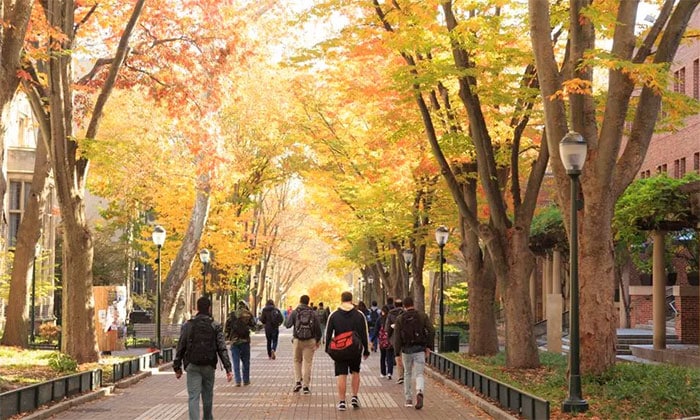
Image courtesy of Getty.
Irma Becerra is president of Marymount University, a comprehensive doctoral-granting university known for its innovative curriculum.
Society thrives when citizens are informed, engaged and empowered. But today, I believe global challenges like authoritarianism, polarization and civic apathy pose significant threats to democratic systems worldwide. To confront these challenges, universities play a crucial role as drivers of civic engagement and democratic values, preparing students not only for careers but also for active citizenship.
As a university president, I have witnessed firsthand through the years how higher education institutions can serve as catalysts for cultivating not only informed, ethical and engaged business leaders but also citizens. Our responsibility extends beyond academic instruction—we must prepare students to lead with compassion, courage, integrity and a commitment to the common good.
Championing Civic Engagement
Universities are uniquely positioned to foster civic responsibility and a deep appreciation for democratic values. At my institution, for example, we encourage active citizenship through initiatives such as our annual Ethics Week. Students, faculty and community members engage in meaningful dialogue about critical ethical issues, encouraging reflection on the responsibilities of citizenship in a democratic society.
Institutions can also explore opportunities to partner with initiatives that encourage exceptional leadership and creating a positive change. This can inspire civic-minded students and nurture a sense of agency and purpose in participants, readying them to promote change in their communities and beyond.
Similarly, corporations can create an employee resource group that is focused on ethics and civic engagement. This could, therefore, provide a safe space for conversations among individuals interested in sharing their experiences—from concerns to best practices to lessons learned. In the era of AI, I believe it’s increasingly important to allow space for free exchanges among employees.
From Classroom To Workforce
The journey from school to career is not just about academic and professional preparation—it’s about equipping students with the values and skills to lead as ethical, engaged citizens. To do this, emphasize service-oriented learning that connects academic pursuits with community impact. For example, our physical therapy doctoral program’s annual service trip to Appalachia gives students the opportunity to provide treatments to underserved populations. The opportunity to give back brings our faculty and students together on a common goal via a shared-purpose activity.
Experiences like these can inspire a lifelong commitment to social responsibility, and graduates can carry these principles into their careers to shape the corporate world and society as a whole. With a values-based education, students can become advocates for justice and inclusion, leveraging their leadership positions to drive meaningful change.
Diversity As A Strength
I believe diversity is essential to a thriving democracy, and colleges and universities serve as microcosms of our broader society. My institution’s student body represents 66 countries, and every day, I see how a global perspective enriches a campus community by fostering empathy, understanding and collaboration across cultural boundaries.
Through diversity, students can gain a deeper appreciation for the values that unite us as a nation, even amidst our differences. They learn to find the common good among all the differences. By embracing varied perspectives, students can learn to navigate complex societal challenges with openness and respect, qualities that are indispensable in the workplace and society.
Global Perspective
As a Cuban immigrant, my personal journey has shaped my perspective on democracy’s importance. When Castro’s communist regime took power in my birth country, I fled with my family to Puerto Rico in search of freedom and opportunity. This experience instilled in me an unwavering belief in the transformative power of education and the responsibility to protect democratic ideals.
Today, while I believe the U.S. remains a beacon of hope, we can also learn valuable lessons from other nations that emphasize community building and civic participation. Strengthening our democratic systems requires a renewed focus on core values such as justice, inclusion and equal access opportunities for all. Universities are at the forefront of this mission and should strive to foster critical thinking and ethical decision-making that prepare students to address these global challenges.
Call To Action
To the next generation of leaders, my message is simple—your voice matters. Stay informed, engage in your community and let your values guide you in building a just and equitable society.
For colleges and universities, our mission is clear—provide students with the tools and inspiration they need to be conscientious citizens in addition to successful professionals. For corporations, partnering with higher education institutions offers an opportunity to nurture a workforce that embodies these same civic values. Together, we can ensure that today’s graduates become tomorrow’s ethical leaders, dedicated to protecting and enhancing the democratic systems that unite us.
Education is the cornerstone of a thriving society. By fostering intellectual curiosity, ethical leadership and a commitment to service, we empower our students to make a difference in their communities, professions and the world. In doing so, we reaffirm the enduring principles that define our shared humanity and collective purpose.
