




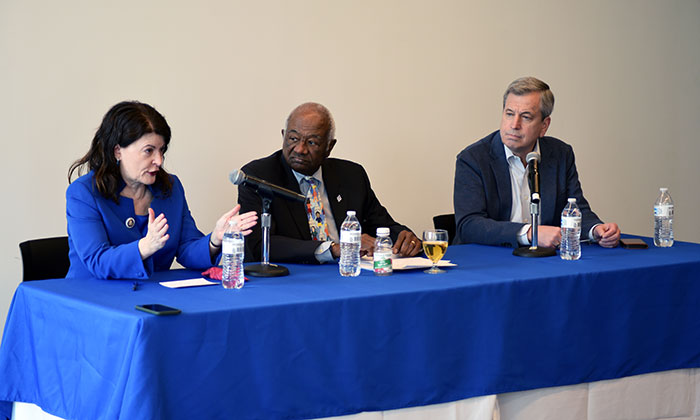
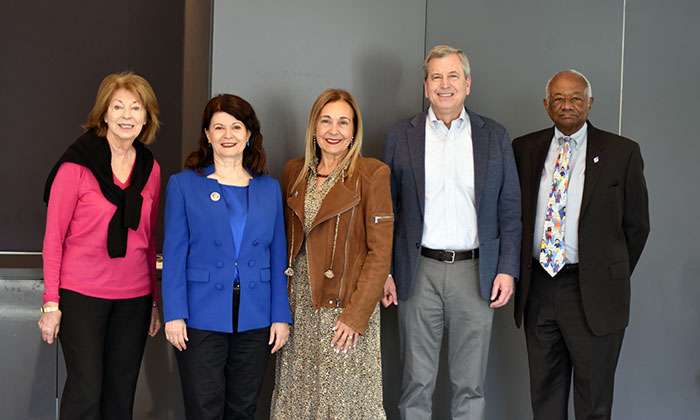
Marymount University welcomed Virginia State Senator Barbara Favola, Virginia State Delegate Rip Sullivan and Marymount trustee Jim Dyke last week for an insightful discussion on the outcomes of the 2025 Virginia General Assembly session. Held on February 26 at the University’s Ballston Center, the event provided students, faculty, staff and the general public with a firsthand look at key policy decisions and their impact on higher education, health care and the broader Arlington community.
“At Marymount, we believe in fostering civic engagement and empowering our students, faculty and community members to be informed and active participants in the democratic process,” said Dr. Irma Becerra, President of Marymount University. “This event provides us with an opportunity to hear directly from key policymakers about the issues shaping the future of our region and the entire state.”
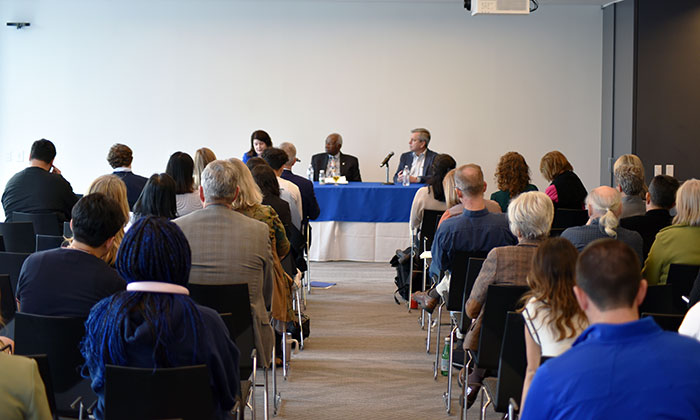
The discussion covered various legislative priorities and challenges faced during the session, including federal funding uncertainties and policies to strengthen education, employment and public safety. Between January 8 and February 22, the General Assembly worked to pass over 900 bills that now await Governor Glenn Youngkin’s approval, amendment or veto before the legislature reconvenes on April 2.
One of the significant highlights mentioned during the event was the aim to expand funding for K-12 public education. A recent study determined that Virginia underfunded schools by billions of dollars, but lawmakers sought to change that trajectory during this legislative session. One bill, for example, allotted $52 million to assist schools in providing services for children who need increased support or have disabilities.
Sen. Favola also addressed the complexities of budgeting at the state level, particularly with an uncertain outlook regarding federal contributions.
“We had quite a challenging year in terms of the budget, partly because we don’t know what’s going to happen at the federal level—and that’s a big deal,” she said. “It’s very hard to plan when you know you’ve got some big-ticket items where the federal government is a partner, and yet we keep hearing how the government may reduce its matching dollars for areas like Medicaid expansion.”
She also discussed efforts to support federal employees in Virginia who could face layoffs or reductions in force at government agencies, exploring measures such as extended unemployment benefits or increased payments to those affected.
Del. Sullivan, meanwhile, emphasized the efficiency of the Commonwealth’s legislature compared to the U.S. Congress.
“What goes on in Virginia’s General Assembly is a very, very different experience than what you’ll see across the Potomac, for many reasons,” he said. “I’ll put our record up against Congress any day of the week. We passed hundreds and hundreds of bills in just a matter of weeks that would take Congress a decade to pass, and we put in incredible hours to get these things done. I tell people that when you’re in the General Assembly, you better be a morning person because you’re off to committee meetings by 7 am and you’re not back in your room until 10, 11 o’clock at night.”
The discussion also delved into pressing policy areas that included enhancing childcare access through state-supported business incentives and implementing a paid family leave program that allows up to 12 weeks for employees to care for new children or family members. Other efforts included surveying local school systems to improve student access to mental health services, addressing housing affordability and infrastructure challenges, establishing crisis stabilization centers to ease pressure on emergency rooms and law enforcement and providing tax rebates to Virginia residents in response to a budget surplus.
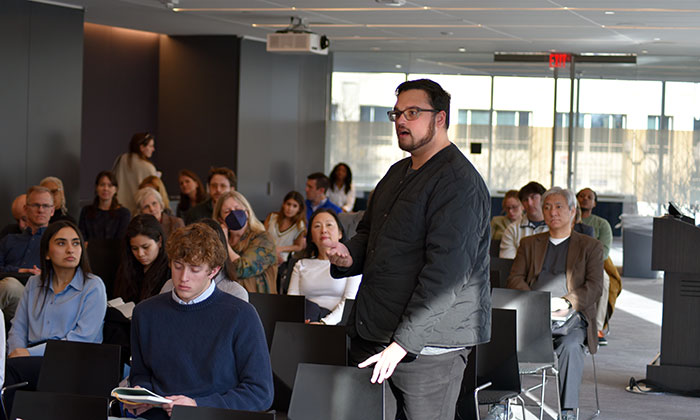
In addition to policy discussions and giving attendees a deeper understanding of the impact of state-level legislative decisions, the speakers offered advice to students considering a political career.
“There is no one path. All I can suggest is that you get prepared, and there’s a million ways to do this,” Del. Sullivan explained. “My way of contributing to the community was serving on every board and commission I could, so I learned a lot about how government worked. I love this job—it’s a great way to give back.”
“At the end of the day, you’re asking people to endorse you. So you need to have a record of service,” Sen. Favola added. “If you care about women’s equality, join groups that promote that and take on a leadership role. If you care about your neighborhood, join your civic association and get involved. If you care about education, pursue an appointment to a school board or committee. But people in the community have to know you, and you need to have some type of reputation.”
“I’ve always operated under the theory that if you want to get struck by lightning, you need to be where the storm is. That means going to these groups and getting active,” said Dyke, a Senior Advisor with McGuireWoods Consulting and former Virginia Secretary of Education under Governor Douglas Wilder. “Public service can be a real rewarding experience. I’ve had a lot of jobs in my life, but I’ve never had a job I enjoyed more than being Secretary of Education because you felt as if you were making a difference. It makes you feel good about getting up in the morning, knowing you can do something that will make somebody else’s life better.”
