




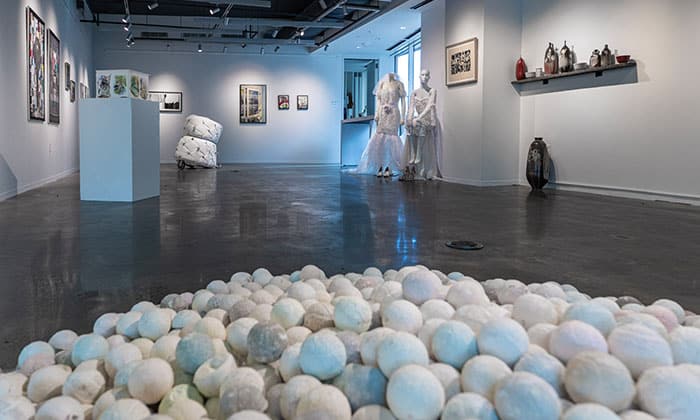
On January 21, Marymount University’s School of Design and Art hosted a faculty panel event celebrating “Iterations,” an exhibition showcasing the creative work of Marymount faculty across the Design and Art, Fashion Design, and Interior Architecture and Design programs. Held in conjunction with the exhibition at the Cody Gallery, the event offered students, faculty and guests an opportunity to hear directly from the artists about their creative processes, inspirations and evolving practices.
Co-curated by Sal Pirrone, sculptor and Assistant Professor of Interior Architecture and Design, and Susan Hergenrather, Professor of Practice of Interior Architecture and Design, the exhibit sought to explore the concept of iterations across artistic mediums, particularly how repeated exploration, refinement and experimentation impact creative expression.
“We are extremely proud of this show and it’s amazing to see the work of colleagues and friends across mediums all coexisting in one space,” Pirrone said. “Each piece is unique and the show represents the incredible cross-section of the media and talent we have here at Marymount.”
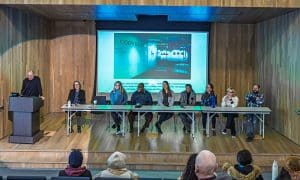
Nine of the eleven artists featured in the exhibit shared summaries of their artistic process, the meaning behind their work and how they felt it tied into the theme of “Iterations.”
Among them was Joseph Hicks, director of the School of Design and Art and Professor of Studio Art, who used three ceramic pieces to demonstrate the multifaceted nature of iterations in art.
“In my work, the concept of iterations goes really deep. One reason is that I am using a technique that is an iteration of historical Japanese glaze that originated in the 1500s. Another reason is that each piece is unique. Every time I fire them, they turn out slightly different due to the chemical processes that take place. No two pots are ever glazed the same. So really art, history and chemistry or coming together to create new forms, which is truly amazing.”
Heather McMordie, who began teaching in the School of Design and Art in Fall of 2025, created three multi-media prints that explored the theme of iterations through the lens of art and environmental science.
“All of my work is based on responses to environmental science, that is, responding visually to the work of oil scientists and restoration ecologists,” McMordie explained. “I layered different colors and types of paper to evoke the elements I saw in the landscape and soil samples I studied.”
Following a brief presentation by each artist, attendees were encouraged to ask questions, one of which came from a student curious wondering how to balance criticism with personal expression.
“Write down all of the feedback that you hear, both good and bad, and leave it for 24 hours,” McCordie said. “Then come back to it and decide what you want to accept and what you want to reject. Accept the things that support your artistic growth, reject the things that don’t feel true to you.”
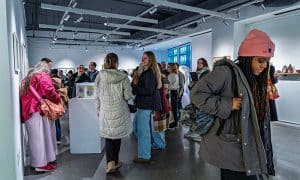
After the panel, all participants were invited to a reception in the Cody Gallery to explore the pieces and speak with their respective artists.
“The idea of iterations is fundamental to design and art and even education,” Hicks said. “We all go through many iterations of ourselves as working professionals and artists. I think what you’ll find as you develop in your careers moving forward is that you’ll lean on that idea of iterations in your art and in your personal life and that will be where you experience growth and innovation.”
