
Faculty Spotlight: Dr. Mirian Campos
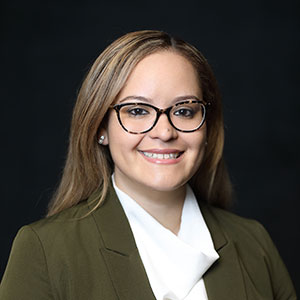
Assistant Professor & Faculty Advisor, School of Counseling
Marymount Graduate in the Class of 2015, Doctoral Class of 2019
Degrees:
M.A. in Clinical Mental Health Counseling, Ph.D. in Counselor Education and Supervision
Tell us about your background.
I was born in Virginia but my parents are from El Salvador, so I was a first-generation college student. I spent my undergraduate years studying psychology at George Mason University because I always had the counseling career path in mind. When preparing for graduate school, I found Marymount’s Master’s in Clinical Mental Health Counseling and it was everything I was looking for. While earning my master’s, Marymount started its Ph.D. program in Counselor Education and Supervision. After graduating with my master’s in 2015, I went right into the doctoral program and eventually earned my doctorate in 2019. Now I can proudly say I am a double Saint who has come back to serve on the faculty here in the School of Counseling.
What do you most enjoy about teaching?
Supporting new clinicians as they’re growing, and guiding them so they can avoid the mistakes I made. Being first generation, I didn’t know too much about how the counseling field worked—just that I wanted to help people with their mental health concerns. There were many logistical things I wasn’t expecting that made my early years as a counselor difficult. So I emphasize having practical conversations with my students early on to ensure they know what to expect in the real world. I also make a point to share my real-world client experiences with my students in the classroom to give them a sense of what’s out there and what they will encounter. Preparing students for real-world scenarios feels very rewarding, rather than just teaching out of a textbook.
What do you like about Marymount in particular?
I like that Marymount is a smaller university that takes collaboration seriously. The small size helps me build connections with professors in other departments, which adds to the community feeling and provides more opportunities for interdisciplinary collaboration on research. I also love the fact that Marymount is a Hispanic-Serving Institution! I am proud to be a Latina faculty member in a field where we need more representation. The University really emphasizes celebrating diversity and encouraging multicultural education in all disciplines.
What is your advice to counseling students as they begin their professional careers?
I’m a big advocate for continued consultation. In a clinical setting, a professional counselor oversees students and can be a resource for them as they encounter obstacles and unexpected challenges in counseling sessions. But once students are fully licensed counselors, their supervisors go away and they often don’t know where to turn if they have questions or problems. I encourage my graduate students to build a solid network while still at school so they know where to seek supervision or consultation when things come up that they don’t know how to handle. Some people think asking for help is a sign that you don’t know what you’re doing. But really, it’s a sign that you are looking to continually learn and grow and become the best counselor you can be.
Why do you think diversity is so important in the counseling profession?
The more time passes, the more diverse our local communities become. In the Arlington area, a huge Spanish-speaking population could benefit from counseling resources and mental health care. But the counseling profession doesn’t reflect that diversity. We don’t have as many bilingual counselors that could provide the quality of service needed to care for these individuals. Bilingual students can overcome that initial language barrier and serve those communities. Many individuals also want a counselor who understands the nuances of their culture, who can speak to that experience rather than dismissing it. So students from diverse backgrounds and multicultural upbringings can bring so much to the table as counselors.
