




Black History Month Spotlight: William “Bill” Allen

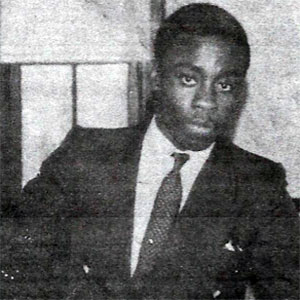
Current Position:
Visiting Assistant Professor of Fashion Design in School of Design and Art
Hometown:
Philadelphia, Pa.
Where are you from, and how did your journey in fashion begin?
I’m originally from Philadelphia, and my fashion journey began at a very young age. While I was still in high school, a guidance counselor noticed my interest in sewing and garment construction and encouraged me to pursue it seriously. That advice led me to attend the Clarissa School of Fashion Design, where I earned my associate degree. I then went on to earn two bachelor’s degrees from the Fashion Institute of Technology (FIT), one in apparel production management and another in fashion design with a concentration in men’s and women’s tailoring. Those early years gave me a strong technical foundation and taught me discipline, craftsmanship and the importance of understanding fashion beyond sketches and aesthetics. I later earned a master’s degree in textile engineering and product development from Jefferson University, formerly known as Philadelphia College of Textiles and Science. In addition, I hold a Level 3 certification in government contracting, which played a major role in my work with the federal government. Now I am proud to be educating the next generation of designers here at Marymount.
What professional experiences shaped your career before coming to Marymount?
After graduating from FIT in the 1980s, I began my professional career working in Paris for a fashion company, which gave me invaluable international experience. I later returned to the United States and spent several years commuting to New York while working in the private sector. Eventually, I transitioned into public service as a clothing designer with the Defense Logistics Agency, supporting uniform design and production for multiple branches of the U.S. military.
That role was highly technical and demanding, requiring precision, leadership and deep industry knowledge. I later moved into nonprofit leadership and consulting, where I advised companies on securing government contracts. Each phase of my career strengthened my understanding of fashion as both a creative and technical discipline and reinforced the importance of preparation and adaptability.
What brought you to Marymount University?
While working as a consultant, I learned about an opportunity to teach at Marymount University. I reached out directly, expressing my interest in education and mentorship. Several months later, I received a call inviting me to join the faculty. I began teaching at Marymount in 2019. What immediately stood out to me was the opportunity to make a meaningful impact within a smaller academic community where students benefit from individualized attention and close faculty mentorship.
What makes Marymount’s Fashion Design program unique?
Marymount’s Fashion Design program offers students an experience that is both rigorous and personal. Because of the university’s size, I can work closely with students and provide hands-on instruction from the very beginning of their academic careers. I emphasize technical excellence early, introducing pattern drafting, garment construction and textile knowledge in the first semester. Several of my first-year students have had their designs walk the runway at the annual Portfolio in Motion fashion show, which is a testament to the technical skills they take away from my class and this program.
My goal is to ensure students are fully prepared for the realities of the industry and can compete with graduates from top fashion institutions worldwide. I want students to understand that fashion is not just about creativity, it’s about execution, discipline and knowing how to turn ideas into finished garments.
What inspired you to transition into teaching later in your career?
Giving back is central to who I am and for me, teaching is a form of paying it forward.
Over the years, I experienced challenges, setbacks and moments where I had to prove myself repeatedly, particularly in leadership roles. Those experiences taught me resilience and the importance of being prepared at all times. I wanted to share those lessons with students so they wouldn’t have to learn everything the hard way. Teaching allows me to pass on not only technical skills but also life lessons about professionalism, perseverance and integrity. I see my role as helping students avoid unnecessary obstacles and equipping them to succeed with confidence.
Teaching is just one of the ways I give back to my community. In addition to teaching, I am an ordained deacon in the Baptist Church, a role I have held since 2007. My father was also a deacon for more than 50 years, and watching his lifelong commitment to service deeply influenced me. My faith guides how I approach teaching, leadership and relationships with students.
One of the most personal ways I give back through my craft is by designing garments for the deceased. Over the years, I have created clothing for loved ones, pastors and community members, including my own parents. I see this work as a final act of love and service — a way to honor someone’s life and provide comfort to their families. It’s a reminder that fashion is not just about appearance, but about dignity, care and human connection.
How would you describe your teaching philosophy?
My teaching philosophy centers on clarity, preparation and engagement. I strive to take highly technical concepts and present them in a way that feels simple and approachable. I want students to truly understand what they’re doing and why it matters. I encourage them to plan carefully, take detailed notes in their own words and actively participate in class discussions.
I treat students as professionals-in-training rather than passive learners. I emphasize accountability, collaboration and real-world expectations so they leave Marymount ready to navigate both the creative and business sides of the fashion industry.
What is it like to see students grow and succeed after graduation?
Watching students grow from beginners into confident professionals is one of the most rewarding aspects of teaching. There is nothing more meaningful than hearing from alumni who tell me they felt prepared, supported and successful because of what they learned at Marymount.
I stay in touch with many former students, writing letters of recommendation and offering guidance long after they graduate. Mentorship doesn’t end at commencement; it’s a lifelong commitment.
What legacy do you hope to leave at Marymount University?
I hope my students remember me as someone who taught every class as if it were my last. I want them to know that I gave my all, constantly striving to improve my teaching and to help them succeed beyond the classroom. If they leave Marymount prepared, confident and committed to excellence, then I’ve done my job.
