




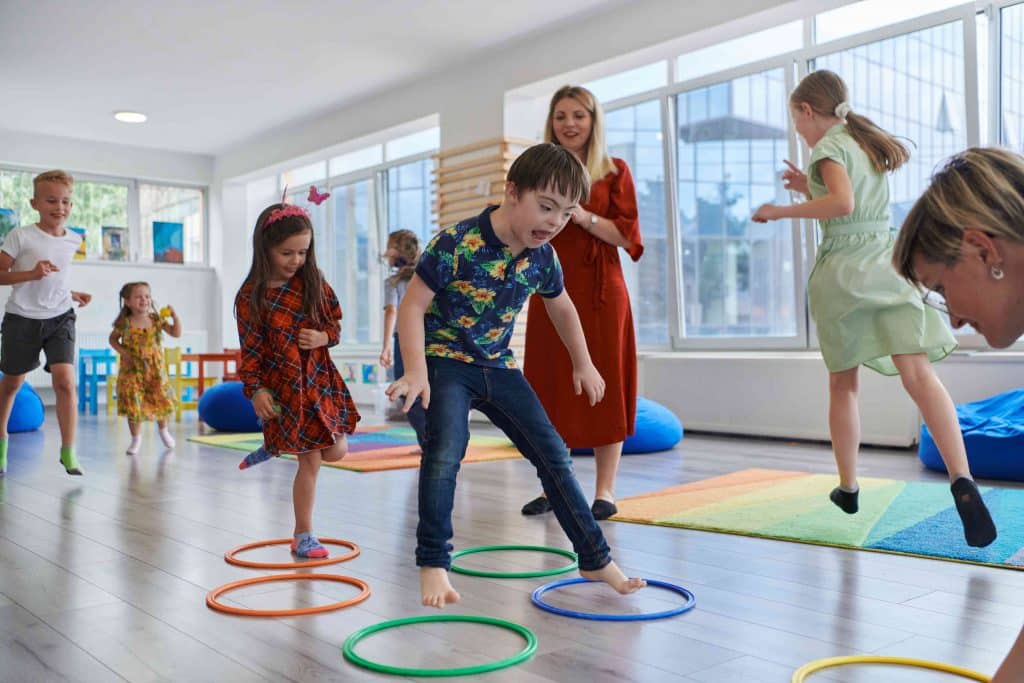
Every child deserves a robust, high-quality education, which means that teachers must actively work to accommodate the diverse needs of all learners in their classrooms. Special education teachers often rely on advanced strategies that address student diversity and enable differentiated instruction within the classroom environment. By exploring the leading inclusive teaching practices and learning more about the importance of educational equity, you can prepare for a rewarding and fulfilling career in special education.
Understanding Inclusive Education
Educational equity has long been a priority among teachers and administrators. However, in recent years, there has been an increased emphasis on creating truly inclusive classrooms, where individualized learning occurs and all students have access to the necessary learning accommodations.
Definition and Goals of Inclusive Classrooms
Inclusive education is defined by UNICEF as the process of ensuring that every child has access to a personalized, high-quality education. In addition, an inclusive classroom environment is one in which all students, regardless of their needs or abilities, have the opportunity to learn alongside one another.
Benefits of Inclusive Education
According to the Inclusive Schools Network, inclusive education benefits all students by:
- Creating opportunities for all learners in the classroom.
- Increasing student engagement.
- Providing behavioral support for students.
- Showcasing the power of student diversity.
Essential Strategies for Inclusive Classrooms
The top special education strategies for inclusive learning environments allow educators to easily create a cohesive, inclusive environment that accommodates the needs of all students. Some of the leading strategies for inclusive education include:
Differentiated Instruction
Differentiated instruction is defined as an educational approach in which teachers tailor their instruction to address the needs of a wide range of students. Instruction can be differentiated by:
- Adjusting the content to accommodate the learning levels and interests of the individual learner.
- Adapting the instructional process.
- Creating project-based learning opportunities so students can showcase their knowledge.
- Creating a welcoming and inclusive classroom environment.
Universal Design for Learning (UDL)
Universal Design for Learning — commonly referred to as UDL — is a framework that emphasizes the importance of building and developing inclusive curricula. The UDL principles enable educators to design curriculum programs that foster deeper comprehension, enhance student organizational skills, boost student engagement, and facilitate self-assessment.
Collaboration and Co-teaching
Classroom collaboration is essential for creating an inclusive learning environment. Teachers who prioritize inclusivity in the classroom often rely on co-teaching models to ensure that all students receive the support they need.
Creating a Supportive Classroom Environment
Actively working to create a supportive and nurturing classroom environment not only supports inclusivity, but also increases student engagement. You can create a supportive classroom environment by:
Fostering Social and Emotional Inclusion
Social-emotional learning plays a crucial role in the modern educational experience. By providing students with targeted social-emotional learning lessons, you can foster social and emotional inclusion in the classroom setting and encourage peer relationships.
Establishing Clear Expectations and Routines
By establishing clear expectations and routines, you can create a structured environment that fosters a sense of comfort and confidence among students. Positive reinforcement is one of the most effective ways to manage expectations and encourage students to follow classroom rules.
Instructional Techniques and Resources
To effectively utilize an inclusive pedagogy, you will need to rely on advanced instructional techniques and learning resources designed to accommodate the diverse needs of all learners in your classroom.
Assistive Technology in the Classroom
Adaptive technology can be a powerful resource, one that should be utilized widely to create an inclusive classroom environment. Some of the best types of assistive technology include:
- Audio recording devices that allow students to record and playback instructions.
- Seat cushions and other flexible seating options.
- Magnifiers that increase the size of instructions or reading materials.
- Translating devices that can translate instructions for multilingual learners.
Behavior Management Strategies
Behavior management strategies that emphasize positive reinforcement are crucial to creating an inclusive classroom environment. You can implement your behavior management strategies by outlining clear expectations in the classroom, adjusting your seating arrangements as needed, and establishing a buddy system that fosters peer relationships and enhances accountability in the classroom.
Addressing Common Challenges
Creating an inclusive learning environment is beneficial to both teachers and students. However, you may encounter challenges along the way as you work to improve educational equity in your classroom.
Overcoming Barriers to Inclusion
Some of the most significant barriers to creating an inclusive learning environment include:
- Inadequate teacher training.
- Limited resources for advanced tools and assistive technology.
- Inadequate facilities prevent teachers from creating an inclusive environment.
Professional Development and Training
Ongoing professional development and advanced teacher training are crucial for enhancing educational equity. Through targeted professional development programs, teachers can explore the Universal Design for Learning framework and learn more about the emerging trends shaping inclusive education in the modern era.
Real-World Examples of Successful Inclusive Classrooms
By looking to other educators for examples of successful inclusive classroom initiatives, you can begin to create your plan for designing a supportive and inclusive learning environment.
Case Studies and Success Stories
Across the world, educators are successfully creating inclusive classrooms that support educational equity. For example, The Walkway School in Pakistan is a school that focuses on creating an inclusive and supportive learning environment, where taboo topics are carefully addressed to improve access to education in the community.
Testimonials and Insights
The Walkway School achieved success by targeting children most impacted by poverty and illiteracy, and then creating community-based educational campaigns to raise awareness and advocate for the needs of vulnerable children within the community. As a result, educators were able to create a welcoming school environment that was accessible to those in the community who needed it most.
The Future of Inclusive Education
Inclusive education for all students is expected to be a top priority among educators in the years to come. As administrators and teachers collaborate to improve educational equity, it is expected that more students will have access to an inclusive education.
Emerging Trends in Special Education
Some of the trends shaping special education include the rapid advancement of adaptive technology and the adoption of trauma-informed teaching strategies. As a result, these trends will provide students with the additional support they need within the special education realm.
Advocating for Continued Inclusivity
Educators, administrators, community leaders, and parents will need to continue advocating for inclusivity in education, ensuring that all learners have an equitable educational experience alongside one another in the classroom.
Learn How to Create an Inclusive Classroom Environment at Marymount University
Teachers across all levels of education rely on differentiated instruction strategies to meet the needs of all learners in the classroom. Still, special education teachers often work with diverse learners who require a wider range of learning accommodations. By leveraging the power of the Universal Design for Learning framework and exploring leading special education resources, special education teachers can work to create a truly inclusive classroom environment.
At Marymount University, we offer a Master of Education in Special Education that enables you to develop proficiency in the essential teaching skills and classroom management strategies necessary for effectively teaching diverse learners in K-12 classroom settings.
Learn more about majors and programs. Schedule an appointment to meet with us or apply today.
Sources
https://marymount.edu/academics/education/master-of-education/special-education/
https://www.unicef.org/education/inclusive-education
https://www.understood.org/en/articles/differentiated-instruction-what-you-need-to-know
https://www.understood.org/en/articles/examples-of-assistive-technology-adaptive-tools
https://files.eric.ed.gov/fulltext/EJ1421555.pdf
https://www.edmentum.com/articles/five-current-trending-issues-in-special-education/
