

In late June, Marymount University announced the launch of its online Master of Science in Speech-Language Pathology (SLP) program. Rooted in cultural humility, global perspective and a strong sense of service, the degree is designed to prepare graduates to address communication and swallowing disorders in individuals of all ages.
This fully online and full-time program maximizes accessibility, allowing students from across the country to complete rigorous coursework, simulation experiences and hands-on clinical training while remaining connected to their communities. With flexible start dates in the fall or spring and robust placement support, Marymount’s online SLP program is uniquely positioned to meet the needs of aspiring speech-language pathologists.
“This program has been designed to maximize student learning, engagement and, as closely as we can, approximate work settings,” said Dr. Megan Mahowald, Program Director for Marymount’s Speech-Language Pathology degree and a leader in speech-language pathology and health care education for over a decade. “We’re building a foundation for graduates to enter the field with deep clinical knowledge, cultural awareness and the confidence to serve diverse populations.”
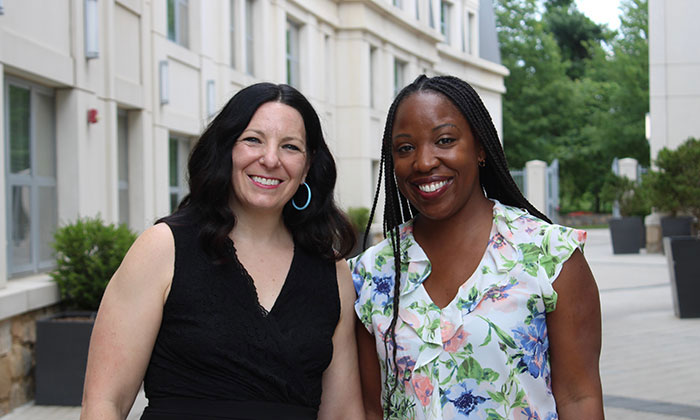
The program integrates academic excellence with real-world clinical experience, preparing graduates for both state licensure and certification through the American Speech-Language Hearing Association (ASHA). Students participate in two in-person residencies at Marymount’s Arlington campus, engage in simulation-based and service-learning experiences and complete two internships, all designed to promote skill development and human-centered care.
The 46-credit degree spans five semesters and includes 400 total clinical hours, including 375 practicum hours that can be completed near students’ communities. Marymount faculty and staff also assist with securing impactful clinical placements in early childhood, school-age and adult settings. From pediatric clinics and special education programs to hospitals and skilled nursing facilities, students are exposed to a wide-ranging view of the profession.
“At Marymount, we recognize that the ability to communicate is a fundamental human right,” explained Dr. Skye Donovan, Dean of Marymount University’s College of Health and Education. “This new program reflects our mission to serve others by developing professionals who are ready to uplift and empower those with communication disorders. Our faculty, curriculum and placement experiences are aligned to help students make a meaningful difference.”
Marymount’s online SLP program stands out for its emphasis on cultural humility and global awareness, values that are core to the University’s identity as Virginia’s first Hispanic-Serving Institution (HSI) and the most diverse private university in the region. In an inclusive environment, students learn from faculty who incorporate global perspectives into their instruction, shaping graduates who are well prepared to address the needs of underserved and multicultural communities.
With median pay for speech-language pathologists reaching $95,410—63 percent higher than the national average, according to the U.S. Bureau of Labor Statistics—demand for licensed professionals continues to grow nationwide. Marymount’s online SLP program meets this need by developing practitioners who combine clinical excellence with compassion and a lifelong commitment to learning.
“Whether working with a young child in an early intervention program, handling developmental disabilities in schools or helping adults recovering from a traumatic injury, our students will be prepared to serve others with dignity, empathy and a deep sense of purpose,” Dr. Mahowald added. “This program is more than a degree—it’s answering a calling.”
*This notice informs students about the accreditation status of the new Master of Science in Speech-Language Pathology (M.S.-SLP) program at Marymount University. At this time, the M.S.-SLP program has not yet been granted accreditation by an accrediting agency recognized by the U.S. Department of Education and/or the Council for Higher Education Accreditation (CHEA).
