




The Potomac Health Foundation has awarded its Howard L. Greenhouse Grant to Marymount’s Center for Optimal Aging to assist in the expansion of the University’s new ALOHA (Arlington Longitudinal Optimal Healthy Aging) initiative.
With $150,000 in grant funding, the Center will transform the traditional health screening model into a mobile, community-focused wellness program designed to serve older adults in Prince William and Fairfax counties, particularly those in underserved Hispanic and Latino communities. It will adapt evidence-based health assessments into a bilingual format that can be delivered in community spaces such as senior centers, libraries and local parks.
By providing culturally responsive physical, oral and cognitive health screenings, chronic disease prevention education and connections to support services, Marymount continues to make a regional impact by delivering real-world solutions through its research efforts. The project has been spearheaded by Erin Staker and Mahederemariam Dagne, graduate students in Marymount’s Clinical Mental Health Counseling program and research trainees at the Center for Optimal Aging.
“This award is a powerful testament to the leadership, excellence and potential of our emerging researchers,” said Dr. Patricia Heyn, Vice President for Research at Marymount University and Director of the Center for Optimal Aging. “It also reflects the University’s deep commitment to mentorship, collaboration and the advancement of meaningful, community-based research.”
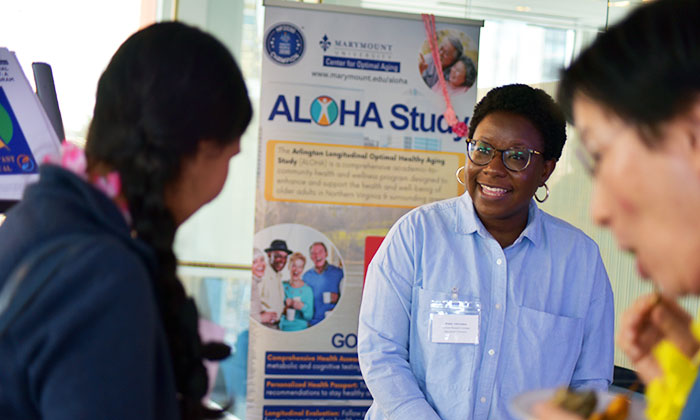
The ALOHA program seeks to empower older adults to better understand their health, adopt sustainable wellness practices and communicate more effectively with their health care providers—all while addressing systemic barriers such as language, transportation and access to care.
“Research shows that when we bring health resources directly to where people live and gather, especially in their preferred language, it makes a powerful difference,” Staker said. “We’re designing this program to be as accessible and culturally relevant as possible so participants feel seen, supported and equipped to take charge of their health.”
“This grant allows us to create a model that goes beyond clinical settings and prioritizes equity and prevention,” Dagne added. “Our goal is to meet older adults where they are, help them understand their health risks and offer them tools they can use every day to live healthier, longer lives.”
The program will be implemented in partnership with local community organizations, including the Woodbridge and Manassas Senior Centers. These sites will serve as key hubs for program activities, outreach and transportation coordination.
“This initiative is well aligned with our commitment to advancing access to health promotion, screening and wellness education for underserved older adults,” said Joshua Lee, acting director of the Prince William Area Agency on Aging. “We are especially encouraged by this project’s focus on reaching Hispanic and Latino older adults through culturally responsive, bilingual services and its thoughtful inclusion of transportation and health navigation supports. This important, unmet need is relevant to many of our community members, and we are confident that this initiative will strengthen community engagement and long-term health outcomes in Northern Virginia.”
