





After more than 13 years of transformative contributions to Marymount University, Professor of Engineering Dr. Eric Bubar will depart in January 2025 to begin a new role at the Johns Hopkins University Applied Physics Laboratory.
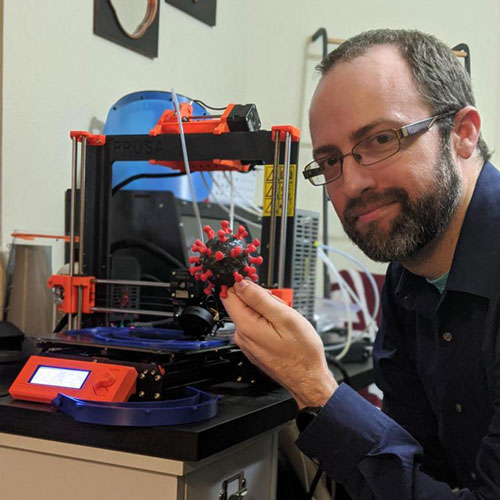
Dr. Bubar’s tenure was defined by his remarkable individual achievements in the unique, innovation-focused environment Marymount supports, which benefits faculty and students alike. With Marymount’s emphasis on interdisciplinary collaboration, cutting-edge research and hands-on learning opportunities, Dr. Bubar helped establish the University’s bachelor’s programs in Biomedical Engineering and Mechanical Engineering and became well known for research in areas like 3D printing and virtual reality.
Marymount’s focus on academic excellence, personalized mentorship and applied learning also provided Dr. Bubar with a platform to introduce new technologies and methodologies in his classes, empowering students to actively engage in real-world problem solving. In turn, his contributions helped Marymount solidify its reputation as an innovation hub where faculty are encouraged to pursue their research ambitions while preparing students for successful STEM careers.
“Every student who has come through Dr. Bubar’s lab has had the opportunity to make a real difference in the world,” said Dr. Irma Becerra, President of Marymount University. “His impact on the institution and the engineering field is profound, and while we will miss him, we are excited to see what he accomplishes next.”
“I have truly valued the opportunity to work with impressive students and colleagues on various projects at Marymount,” Dr. Bubar explained. “It has been an honor to share my knowledge of physics with the Saints community and help make a meaningful impact on so many people.”
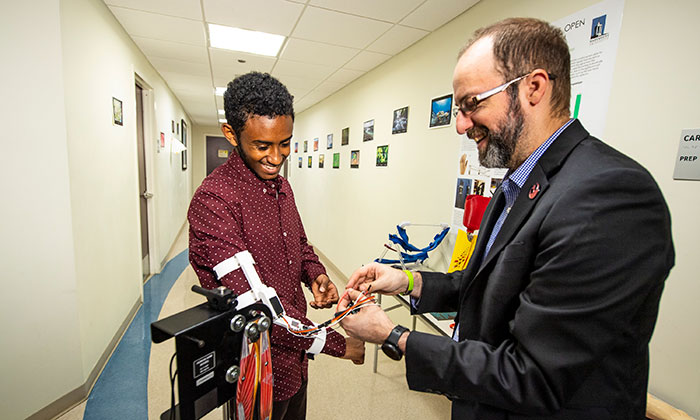
Dr. Bubar joined Marymount in August 2011 as an Assistant Professor of Physics, quickly establishing himself as an innovative research leader. His work primarily focuses on low-resource engineering, utilizing affordable technologies like 3D printing and microelectronics to develop assistive devices. These tools, from prosthetic limbs to electronic wheelchairs, are designed to improve quality of life for individuals with mobility challenges. A key aspect of Dr. Bubar’s approach is making these designs open source, ensuring that people worldwide can access and benefit from them.
“Accessibility is a huge issue with assistive technologies,” he explained. “By making our engineering plans freely available, we’re removing barriers and making it easier for people to obtain the necessary tools.”
In addition to his research, Dr. Bubar’s dedication to hands-on learning has left a lasting impact on Marymount students. His engineering lab in Caruthers Hall has become a hub of creativity and problem solving, where students learn to use cutting-edge technologies and apply them to real-world challenges. Whether developing video games for physical therapy or designing prosthetic devices, students in Dr. Bubar’s courses are encouraged to think critically and innovate.
“Dr. Bubar would bring our physics problems off the paper with real-life demonstrations. I remember smiling from ear to ear watching his hovercraft made from a leaf blower fly around during a class – he made physics tangible and fun,” recalled Eric Malani ’20, a fourth-year medical school student. “He’s also a very humble person who doesn’t chase the limelight for himself but generously seeks opportunities for his students to get valuable experiences and recognition in their fields. He has been, by far, the most influential professor of my academic journey.”
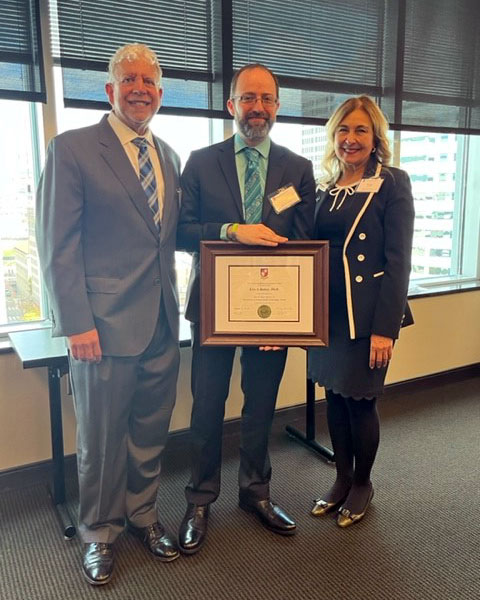
Dr. Bubar’s work has been recognized far beyond Marymount’s campus. In 2022, he received the prestigious H. Hiter Harris III Excellence in Instructional Technology Award from the Virginia Foundation for Independent Colleges (VFIC), recognizing his innovative approaches to teaching and learning in STEM.
He also demonstrated his leadership and passion for serving others at the onset of the COVID-19 pandemic. Volunteering his time and expertise to produce personal protective equipment (PPE) for frontline health care workers using 3D printers, he helped address an urgent need at hospitals in the national capital region and beyond.
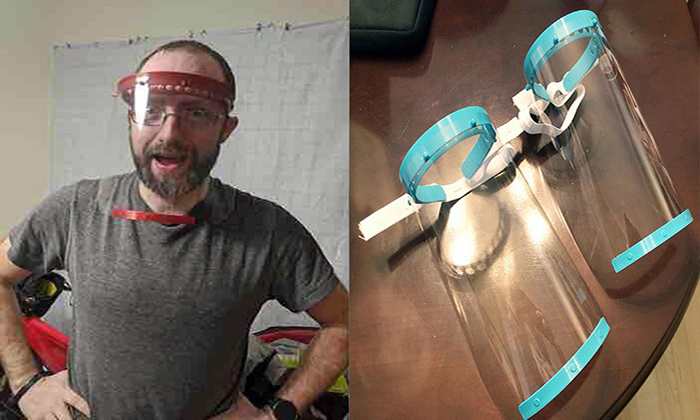
“Service to others is a fundamental piece of a Marymount education,” Dr. Bubar said. “During a very uncertain time, we figured out how to continue serving those in need by using technology to create a variety of effective, customized PPE equipment for health care workers and individuals providing critical services.”
Dr. Bubar’s influence at Marymount also included mentoring the next generation of STEM professionals. He played a leading role in the NSF-funded PROJECT DREAM as he guided students through research projects and hands-on learning experiences, and designed the Summer Institutes in Engineering, which offer high school students early exposure to the field and inspire many to pursue STEM careers.
One of the hallmarks of Dr. Bubar’s tenure was his approach to teaching, which blended pop culture with complex scientific principles. By connecting superhero movies and comic books with engineering concepts, he made learning relatable and engaging for his students. Many appreciated his ability to connect their interests with the rigorous demands of physics and engineering.
“The Movie Science course I took with Dr. Bubar during my freshman year was one of my favorites. Through action movies like ‘Batman’ or ‘Ironman,’ we would break down famous scenes, dissect the physics involved and watch these films from a different perspective,” said Katherine Sanchez ’19, who now works as a biomedical engineer. “He was also my mentor in Marymount’s Honors Program and inspired me to explore my interests in STEM. He has always been filled with jokes, encouragement and advice whenever I needed it, and he is one of the most instrumental professors I have had the privilege to know.”
The departure of Dr. Bubar marks the end of an era at Marymount. Still, the University community will remember his indelible mark on the institution as his contributions continue to inspire and shape the future of Marymount’s engineering programs. Under his leadership, they grew to become remarkably diverse classroom environments – 37.5 percent of students identify as Hispanic, compared to 15.8 percent in undergraduate engineering programs nationally, and 50 percent of students identify as female, compared to 25 percent nationally. This commitment to inclusivity reflects Dr. Bubar’s dedication to providing opportunities for all students to succeed in STEM.
“We thank Dr. Bubar for his years of service, dedication and innovation, and wish him continued success,” President Becerra said. “His legacy is not just in the technologies he has developed, but in the students he has mentored, the lives he has touched and the culture of innovation he has fostered.”
