
Research Spotlight: Special Education in Africa
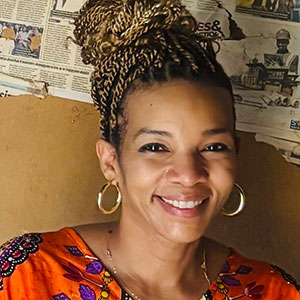
Lead Researcher:
Student Researcher:
Sandra Kindschi
Project Title:
Building Teacher Capacity: A Tailored Professional Development Model for Differentiated Instruction
What has your personal experience been like at Marymount?
I am an Assistant Professor of Special Education in the School of Education and have been at Marymount full-time for about five years. I’m also a proud graduate of Marymount’s Special Education master’s program. I loved being a student here so much that I didn’t want to leave! I earned my doctorate at another university that shared similar values, but always hoped I’d find my way back to Marymount. And now I’m giving back as a professor. It’s been a beautiful, full-circle experience.
What is the focus of your current research project, and why is it meaningful to you?
The goal of this project is to help train teachers in Ghana how to provide the needed resources and education to special needs populations. This project is very close to my heart for a lot of reasons. The seeds of this project took root in 2024, when I visited Ghana on my first trip to the continent of Africa. During a cultural tour, we visited the Assin Manso River, which is historically known as the place where enslaved Africans took their last bath before being marched to the Elmina Castle and eventually sent across the Atlantic. Standing in that river was a powerful experience. Our guide invited us to speak to our ancestors, and I did. I told them how sorry I was for everything they endured and that if there was anything I could ever do to honor their sacrifice, I would. I meant that with all my heart.
Soon after, the opportunity to give back presented itself. I met a woman at a Council for Exceptional Children (CEC) conference, where I was doing a poster presentation about a previous professional development program I’d created for a Ghanaian orphanage. She told me she had just opened a special education school in Ghana and needed help training teachers on special education instruction. That conversation became the foundation for this project.
Over the summer, I partnered with a Marymount graduate student through our research fellowship program, and together we developed a 10-week professional development curriculum for the teachers at the special education school. The focus is on differentiated instruction, assistive technology and strategies for inclusive teaching.
What were your major goals in this research project?
One of my goals was to avoid the “one-and-done” model of professional development, so we built this around a continuous professional development framework. Each week includes a module, and we ask participants to complete an “exit ticket” or short survey at the end of each module. They reflect on how it went, whether they’ve implemented the strategies and what they still need help with. We also keep in touch with them weekly through WhatsApp, sending reminders, encouragement and discussion prompts. There are asynchronous components that they can work through on their own, but we also meet synchronously for group check-ins. This ongoing feedback loop helps us tailor the content, address questions in real time and ensure that the learning sticks.
Success isn’t just about completing the modules—it’s about building capacity, seeing those strategies being used in real classrooms and hearing from teachers about how their mindsets or practices are evolving.
Why is this research important?
There’s still a lot of stigma around disability in Ghana. The school was started to provide a safe, supportive space for children who were otherwise hidden or left at home during the day. The school’s mission is about dignity, inclusion and helping teachers see the potential in every child. That’s what makes this project so impactful.
The school has 14 teachers right now, but we would like to expand training to other educators in the community as well. We want to equip more educators in Ghana and beyond with these tools. That could mean more schools in more communities, and possibly adapting the curriculum for other countries down the line.
How would you like to see this research expand?
While we’ve designed this program specifically with Ghana’s culture in mind, the framework is adaptable. I was very intentional about being culturally responsive and working collaboratively with educators on the ground. It’s essential to approach this work with humility—not with a savior mentality, but an attitude of mutual learning. The people we work with are experts in their contexts. I bring what I know and they bring what they know, and together we create something stronger. I hope the framework we’ve developed can be used to help educators in other countries and cultures create more inclusive environments for students with disabilities.
