




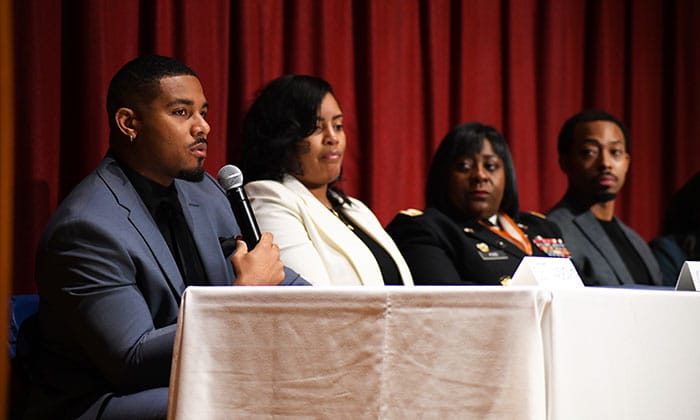
As part of its Black History Month celebration, Marymount University’s Black Student Union (BSU) brought alumni and community leaders to campus for a panel on navigating challenges in the workforce and the professional world.
“We have the unique privilege of hearing from an incredible panel of professionals who have not only excelled in their fields, but have also paved the way for others,” said BSU president Nevaeh Carrington during the event, titled ‘Secure the Bag (The Right Way).’ “Their journeys, insights and advice provide us with valuable lessons about perseverance, success and community.”
Alumni panelists included Ocean-Miracle Morris ‘14, the newly appointed dean of students at Thurgood Marshall Academy Public Charter High School in Washington, D.C.; Aaron Walsh ‘13 ‘18, a finance project manager at Deloitte and one of the founding members of Marymount’s Black Alumni Club; and Courtney Curtis ‘11, owner and executive director of Family Services, Inc. They were joined by community leaders Sergeant Taylen Washington and Retired Lieutenant Colonel Gwen King, who spoke about their time in law enforcement and the armed forces, respectively.
Among those in attendance were over a dozen high school students from Thurgood Marshall Academy Public Charter High School, who came to Marymount as part of a career development field trip. With the support of Marymount’s Black Alumni Club, they received a campus tour, lunch and a chance to hear the panelists speak about their experiences.
Carrington emphasized the importance of exposing young Black students to exemplary role models across industries.
“It’s very daunting to go into a profession where a lot of people don’t look like you,” Carrington said. “But to hear from people who have done it and been extremely successful is so helpful. Events like this are an important reminder to the younger generation that there are people who did it before you, so you can do it too.”
Each of the panelists spoke on their personal journeys, the struggles they faced in their careers and how they worked to overcome them. Sgt. Washington spoke candidly about pivoting from sports to law enforcement, following an injury that upended his NFL aspirations.
“The best thing you can do in the face of challenges is keep showing up and trying to make a positive impact,” Sgt. Washington said. “Having a positive mindset is half the battle. And keep yourself open to unexpected things. I never saw myself in law enforcement, but once I started entertaining the idea, the pieces fell into place. I didn’t have a very positive experience with the police growing up, so my goal now is to create a better experience for the young people that I encounter on duty.”
Similarly, Curtis encouraged students to “lean into” the challenges they faced, emphasizing the growth that accompanies adversity.
“Don’t back away from those challenges, because you are going to learn something from them. Every challenge that you encounter, say, ‘What can I learn from this? What did I not do correctly? What can I do better moving forward?’ Practice that muscle now so you can perfect it for the future.”
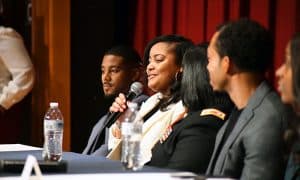
Panelists also spoke about the importance of networking as a personal and professional development tool.
“Instead of approaching networking with the mindset of, ‘What can I get from this person?’ find ways that you can be a benefit to someone else,” Walsh explained. “People are more inclined to help you if you’ve helped them before. So, every time you come in contact with someone, find a way you can help them before you try and help yourself.”
Following the panel, Carrington spoke about the importance of spotlighting Black excellence.
“Black History Month reminds us that history is still being written, and each of us has a role to play. Let’s take the lessons we have learned from our panelists and truly strive to achieve excellence in our lives and careers.”
Walsh and Carrington both encouraged alumni and students to engage with BSU and Black Alumni Club events not just during Black History Month but throughout the year to find community and support.
“I’m deeply passionate about giving back, and it means so much to be able to speak directly to the next generation of Black professionals,” Walsh said. “There are so many things I wish I’d known at their age. My version of giving back is helping them not make the same mistakes I made. Speaking as an alumnus to current and potential students makes it that much more meaningful.”
“Community is so important, especially at schools where you are the minority,” Carrington added. “My goal is to show future generations of Black students that Marymount is a place where they can find community and truly thrive.”
