
Veteran Student Spotlight: Kelly Hailey

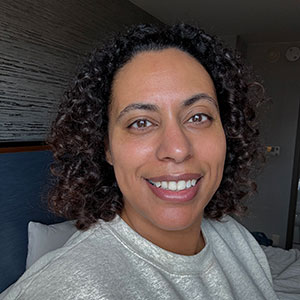
Class of 2026
Former U.S. Army Signal Support System Specialist and Combat Medic
Degree:
Accelerated Bachelor of Science in Nursing (ABSN)
Hometown:
Grand Rapids, Mich.
What brought you to Marymount?
I have worked for years in the federal government—first with the House of Representatives, then with the Department of Defense at Joint Base Myer-Henderson Hall. Before that, I served in the U.S. Army as a signal support system specialist and later as a combat medic. That experience sparked my love for medical work. When I decided to shift from administrative work back to health care, Marymount’s Nursing program was the perfect fit, especially because of its Christian values and supportive environment.
What has your experience at Marymount been like so far?
It’s been great! The combination of hands-on simulations, virtual training and clinical experience has prepared me for real-world nursing. The virtual simulations have helped sharpen my critical thinking skills, and the on-ground practice made transitioning into clinicals much smoother. I appreciate that we’re learning both in person and online. It’s a fast-paced program, but very well structured.
I also love that my cohort is incredibly diverse, which makes learning even more rewarding. Everyone has a previous degree and a unique background—some were in bioengineering, social work or lab research. We all bring something different to the table. That variety really shows in clinical settings, where teamwork and shared perspectives make a big difference. I’ve also met other veterans in the Nursing program, and we share a bond that drives us to continue serving in new ways.
What are your goals after graduation?
I hope to return to Michigan to help advance a bill I previously worked on, which would establish Prescribed Pediatric Extended Care (PPEC) Centers, medical daycare facilities for children with severe disabilities in Michigan. I also want to continue serving, possibly with the VA or Department of Defense Education Activity as a school nurse. Long term, I’d love to help push Michigan to become a compact nursing state so nurses can more easily work across state lines.
As for my interest areas within nursing, I’m particularly drawn to both pediatric and gerontological care. When I worked at Wayne State University, I helped with a program that connected young children with elderly adults for shared activities. It was powerful to see how much they learned from each other, and I’d love to continue to combine those interests and find ways to bridge generational care. My experience, from the military to government to nursing, has taught me flexibility, and I’m excited to see where that takes me and which communities I will be called to serve in the future.
What’s your favorite thing about Marymount’s Nursing program?
My favorite thing is the support system and flexibility that come from being part of a smaller, close-knit program. From instructors to administrative staff, everyone truly listens and goes above and beyond to make sure students feel supported. Because the program isn’t too large, professors really get to know you, your strengths, your goals and even the challenges you might be facing outside of class. That personal connection makes a big difference, especially in such a demanding field.
What advice would you give to veterans or students pursuing a second degree?
Remember, a delay is not a denial. Your journey is your own, and it’s okay to move at your own pace. Transitioning from military to civilian life can be intimidating, but Marymount has people who understand and will guide you. Stay determined, lean on your faith and know that support is always around you.
