




Student Spotlight: Khadijah Lanase
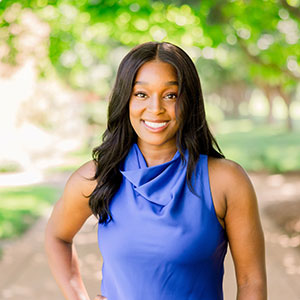
Class of 2025
CyberCorps Scholarship for Service Recipient
Degree:
Hometown:
St. Louis
What brought you to Marymount?
I was on a pre-med track all through my undergraduate years and was heading to medical school, but then the COVID-19 pandemic hit and that made me rethink my future in the health care field. I started exploring alternative career paths that still aligned with my core motivations, particularly my desire to help people and make a real impact. The cybersecurity field stood out because, like medicine, it’s about protection and trust. As I was looking to make the career transition, I discovered the CyberCorps Scholarship for Service Program, which would help finance my cybersecurity degree in exchange for service to a local, state or federal government agency.
I ended up at Marymount by chance. By the time I started applying to graduate programs, many universities had already closed their application cycle. Marymount was one of the few still accepting students. I had never heard of Marymount before and had never even been to the East Coast, but I decided to give it my all. I poured my energy into the application, was accepted and made the life-changing decision to move to Arlington. Two years later, I’m proud to say that I’m a Marymount graduate!
What has your Marymount experience been like overall?
My experience has been incredible. Marymount offers a close-knit, supportive community that was exactly what I needed, especially as a military spouse and parent. There were nights when my husband was deployed with no signal, and I was home alone juggling parenting and coursework. My professors understood. They gave me the space to turn off my camera during class if my son was having a meltdown. They gave me extensions when I needed them without judgment. That kind of empathy and understanding was invaluable. It made me feel seen and supported—not just as a student, but as a whole person.
Are there any standout experiences you had during your time in Marymount’s Cybersecurity program?
One standout opportunity was participating in the Cyber 912 Strategy Challenge. It was a simulation of a national cybersecurity crisis, and it challenged us to think beyond technical solutions. It gave me real insight into the policy, legal and leadership aspects of cybersecurity, which are the areas I want to focus on. Being able to participate in something like that while studying in the nation’s capital was an incredible experience. It shifted how I think about cybersecurity and helped me learn how to communicate risks clearly to decision-makers. That’s a skill I know I’ll carry with me throughout my career.
How do you feel you’ve grown personally and professionally since arriving at Marymount?
I’ve become more proactive and intuitive. I no longer wait for opportunities—I seek them out. Some of my professors designed their classes in ways that pushed me outside my comfort zone, and I’m grateful for that. I’m networking more, learning on my own outside of class and focusing on my personal growth. That’s been key for me. When you develop yourself as a person—emotionally, mentally, spiritually—it strengthens your professional growth too.
What is your ultimate career goal now that you have graduated?
Long term, I want to become a leader in the privacy and compliance space, ideally as a chief privacy officer or a senior cybersecurity leader. I want to work with organizations, particularly in health care or the public sector, to help build systems that people can trust. I’m passionate about making more human-centered technology. I want to drive responsible data practices that prioritize ethics and transparency. That’s my North Star.
What advice would you give other students on how to make the most of their college experience?
Use every resource available—even if you don’t know it exists yet, go looking for it. Take initiative, even in small steps, because they add up over time. Don’t let impostor syndrome stop you from asking questions or reaching out for help. Your lived experiences are your strengths. They will help you stand out in your field. And most of all, be resilient. Life is unpredictable, but if you stay open, adaptable and determined, you’ll find your way. Don’t be afraid to ask for help. I struggled with that at first, but I learned that vulnerability is not weakness—it’s part of the process.
