




Disability Pride Month: Shifting the Conversation Around Disability
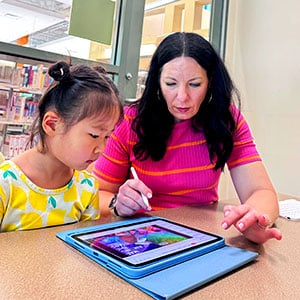
A Conversation with Megan Mahowald, Professor and Program Director of Speech and Language Pathology at Marymount University
Tell me a little bit about where your field intersects with disability and the importance of disability education.
Everything that we do in speech-language pathology is related to disability. We work across the lifespan — from children with developmental disabilities to individuals who acquire disabilities through strokes or traumatic brain injuries, as well as people with degenerative conditions that gradually affect their ability to communicate.
One of the most important things to understand is that disability is socially constructed. We’ve created environments based on a particular idea of what’s ‘normal,’ and we expect everyone to interact within those spaces. If we change the environment or the context, people can be incredibly successful.
That’s something we talk about a lot with our students. We don’t approach disability from a deficit perspective. Instead of asking what someone can’t do, we ask what they can do and how we can support them in meeting their own goals.
How does Marymount’s Speech-Language Pathology program approach disability differently?
Our program is grounded in justice-centered care. We’re not only thinking about assessment and intervention, we’re also thinking about the systems people with disabilities must navigate — from education to health care — and how those systems shape their experiences.
We’re teaching our students to be advocates and to challenge ideas of normality. We want them to meet people where they are rather than trying to change who they are. Sometimes the way a person communicates is deeply connected to their identity, and it’s not our role to make them conform to someone else’s expectations. Our goal is to help them learn to communicate in a way that is effective but that also feels authentic.
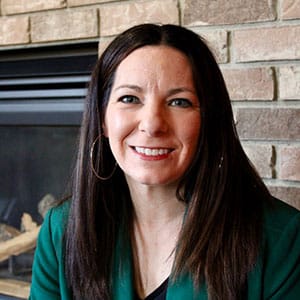
You will be speaking at the SPARC Summit on July 27 on the topic of Advancing Dignity for Adults with Severe and Multiple Disabilities. What are you most excited for?
I think the vision of the event is incredible because it’s really looking at transforming how we work with people with disabilities. What makes it especially exciting is that it’s bringing together people from many different disciplines. They’re not just looking at disability through one lens. There will be experts in design, education, communication and policy all contributing different perspectives. That’s a really interesting way to approach the problem because the spaces we create, the systems we build and the policies we write all impact the lives of people with disabilities.
I think it’s going to be interesting to see such a diverse group of professionals coming together around the same topic. I’m also excited that policymakers will be involved because that’s another way we can really move the needle. When policy and funding support new ideas, it creates opportunities for meaningful change.
If you could change one thing about how society views disability, what would it be?
For me, it’s really about people’s hearts and minds — their willingness to accept people for who they are and what they bring without the expectation that they must prove their value through productivity.
I hope people leave thinking about the humanity of disabled people. Disabled people have the right to exist without having to justify their worth. Simply being part of our communities enriches all of us.
Meaningful inclusion starts with understanding your own perspective and making a genuine effort to connect with people in whatever way feels right to them. We don’t have to expect everyone to communicate or experience the world in the same way. We just have to be willing to meet people where they are.
